
My Little Joy in Winter Many Days Hunting, 1932 (A Pair of Roe Deer)
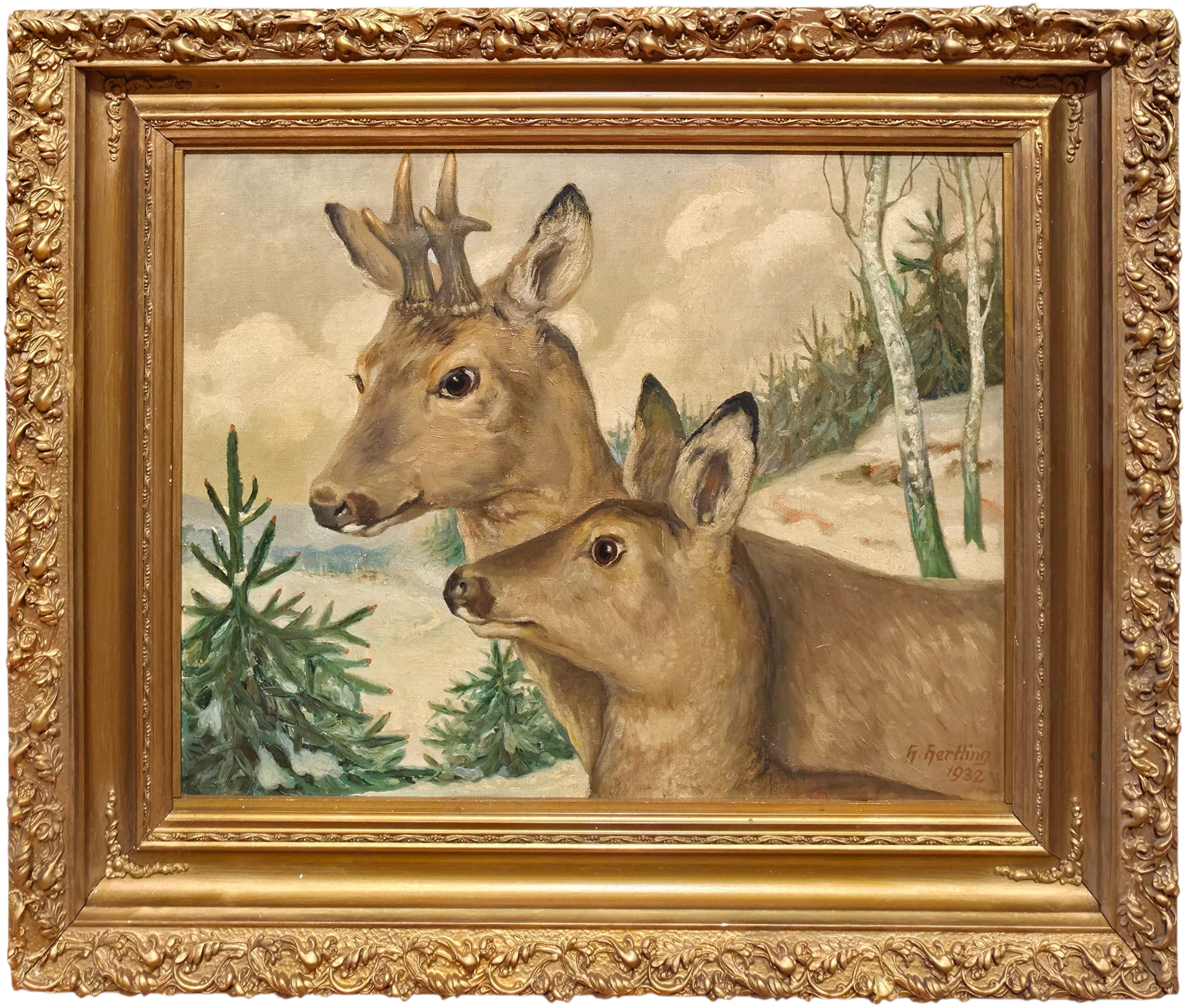
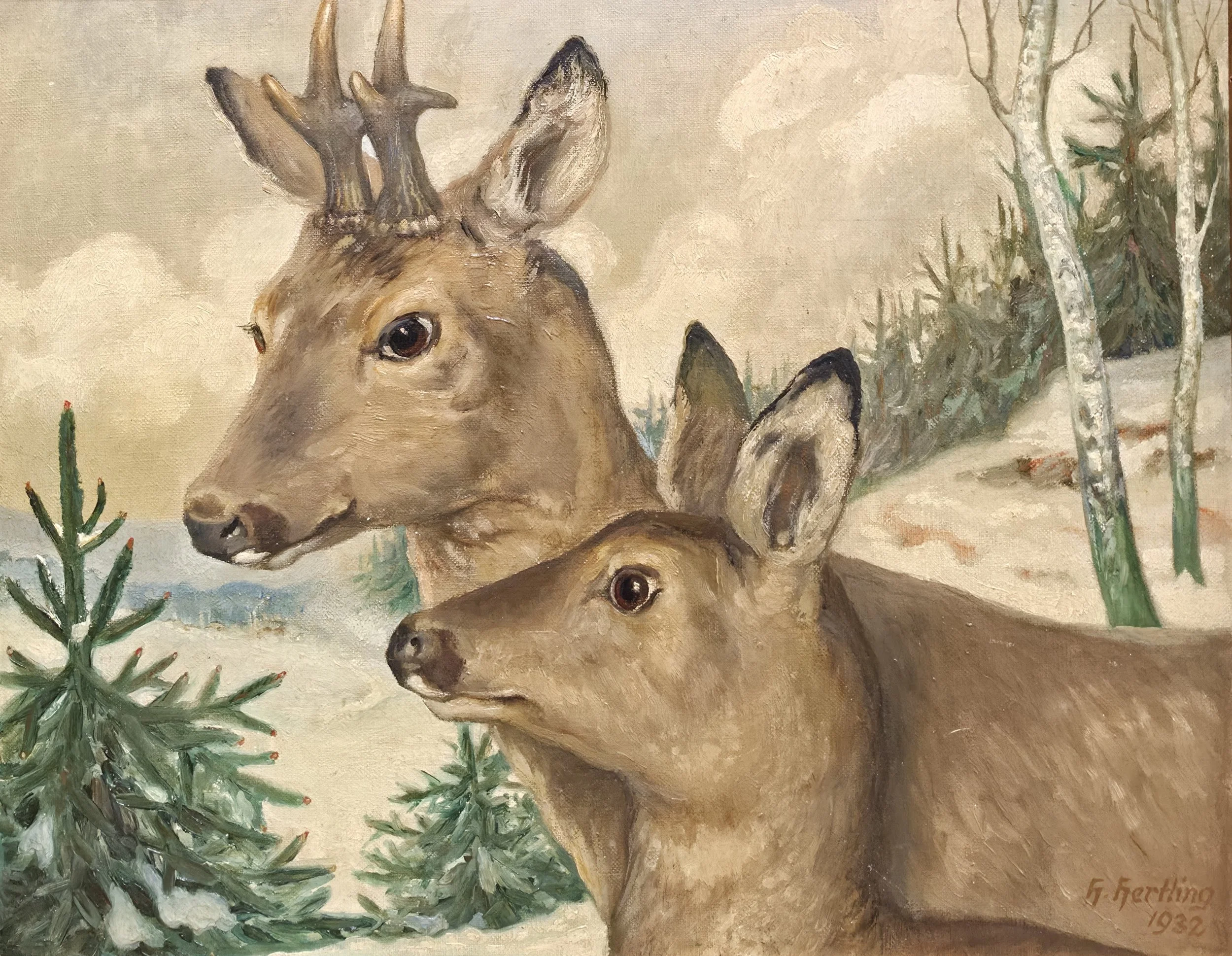
My Little Joy in Winter Many Days Hunting, 1932 (A Pair of Roe Deer)
German, Early 20th Century
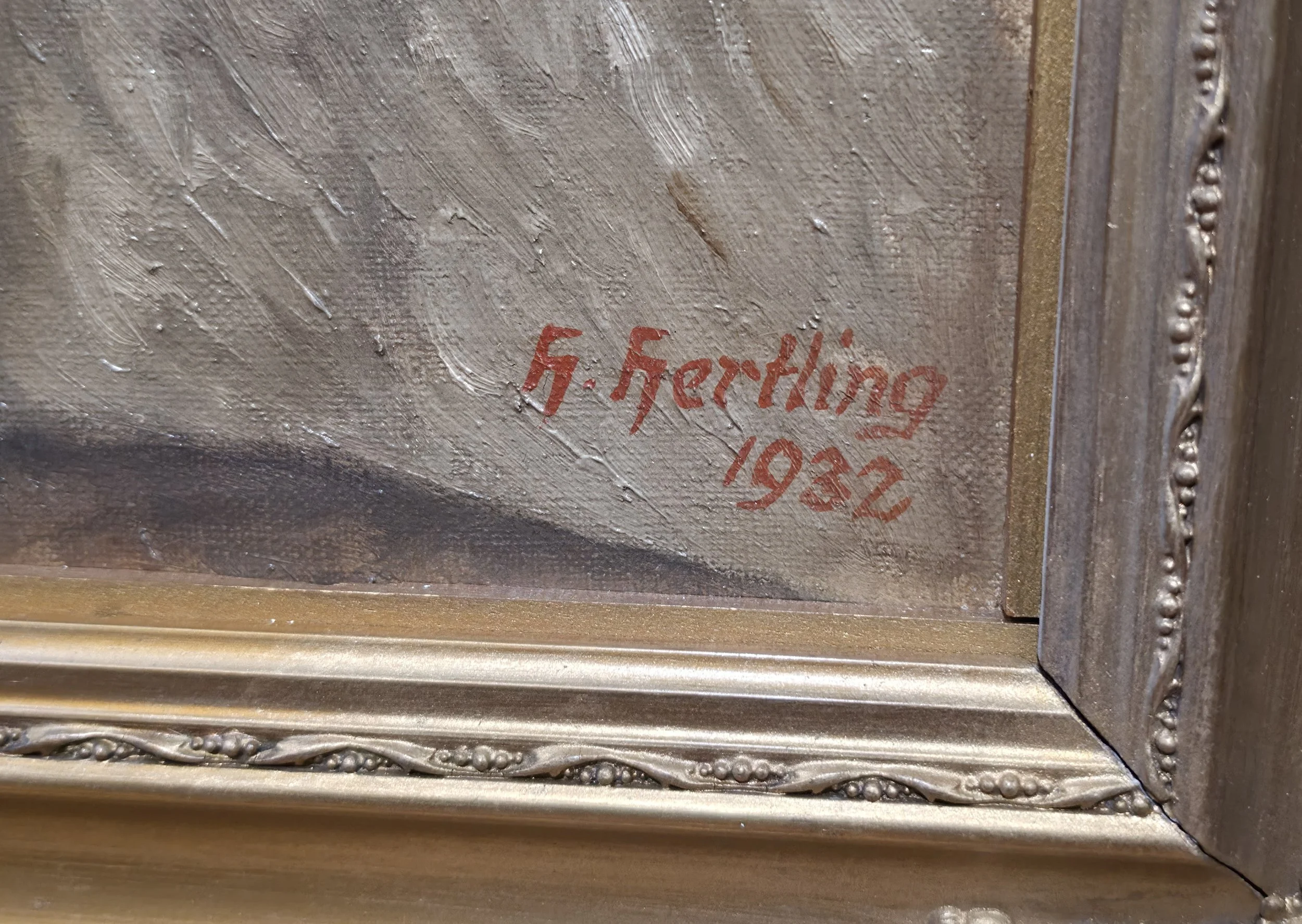
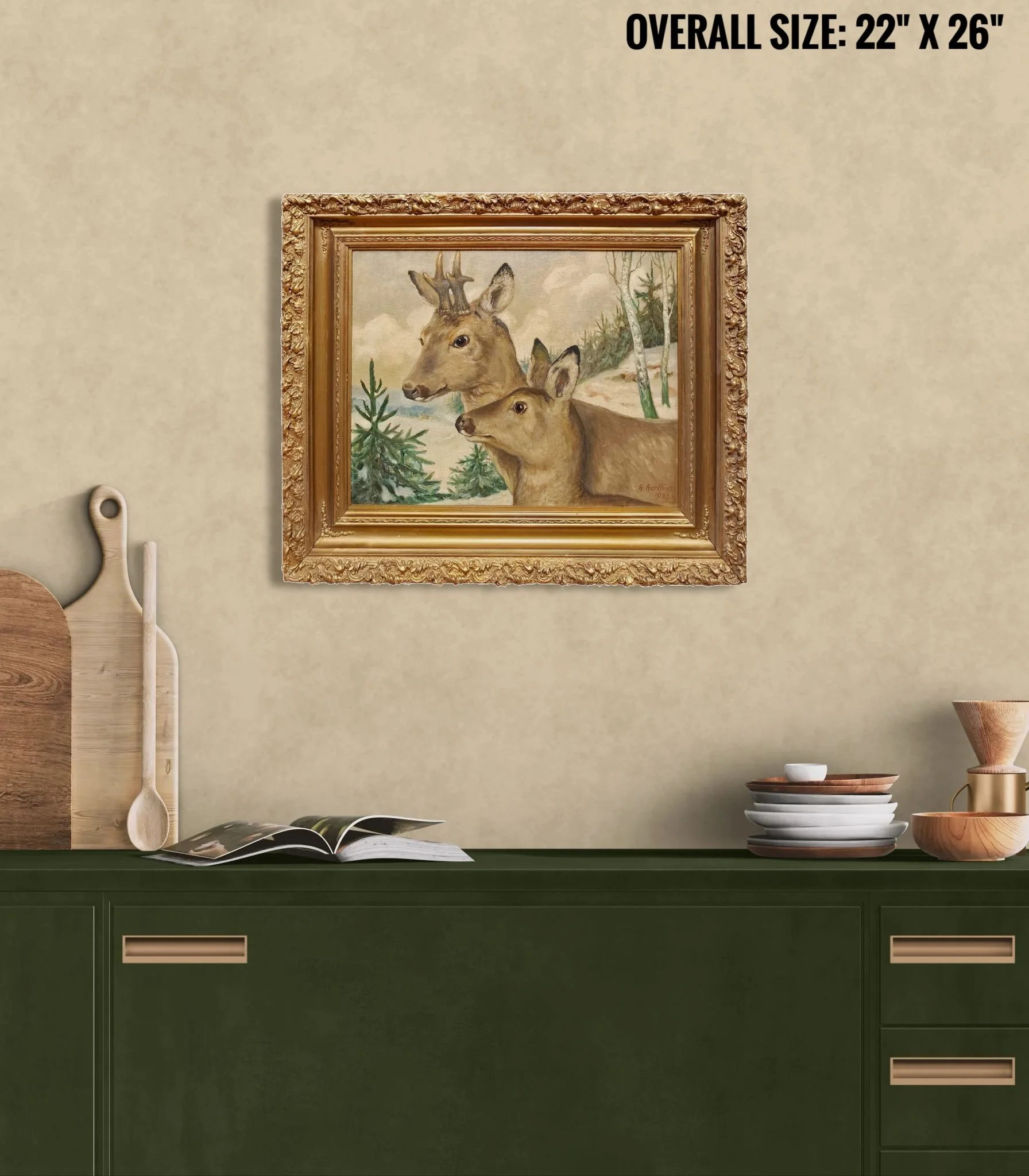
Signed: h. hertling 1932 (Lower, Right)
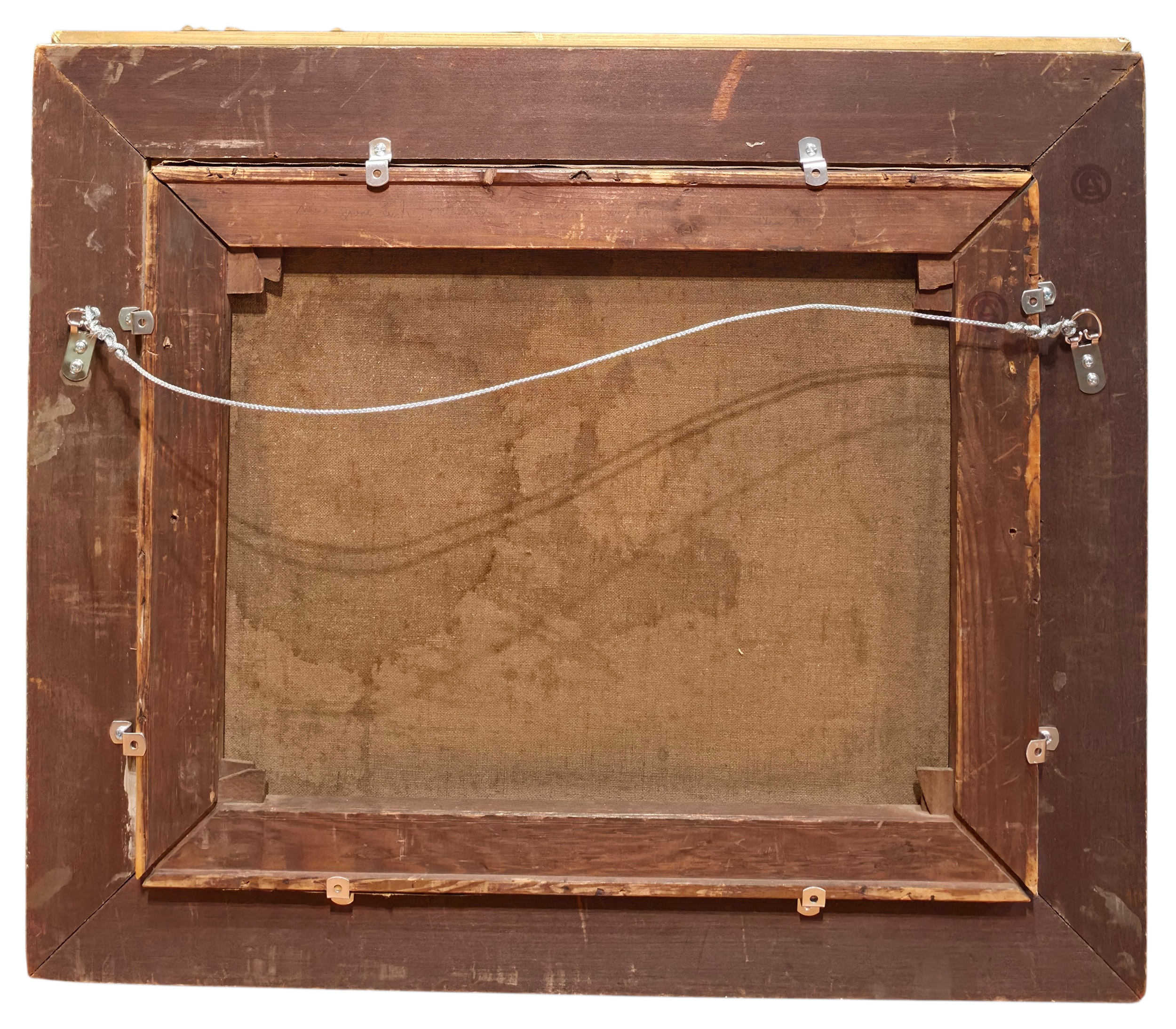
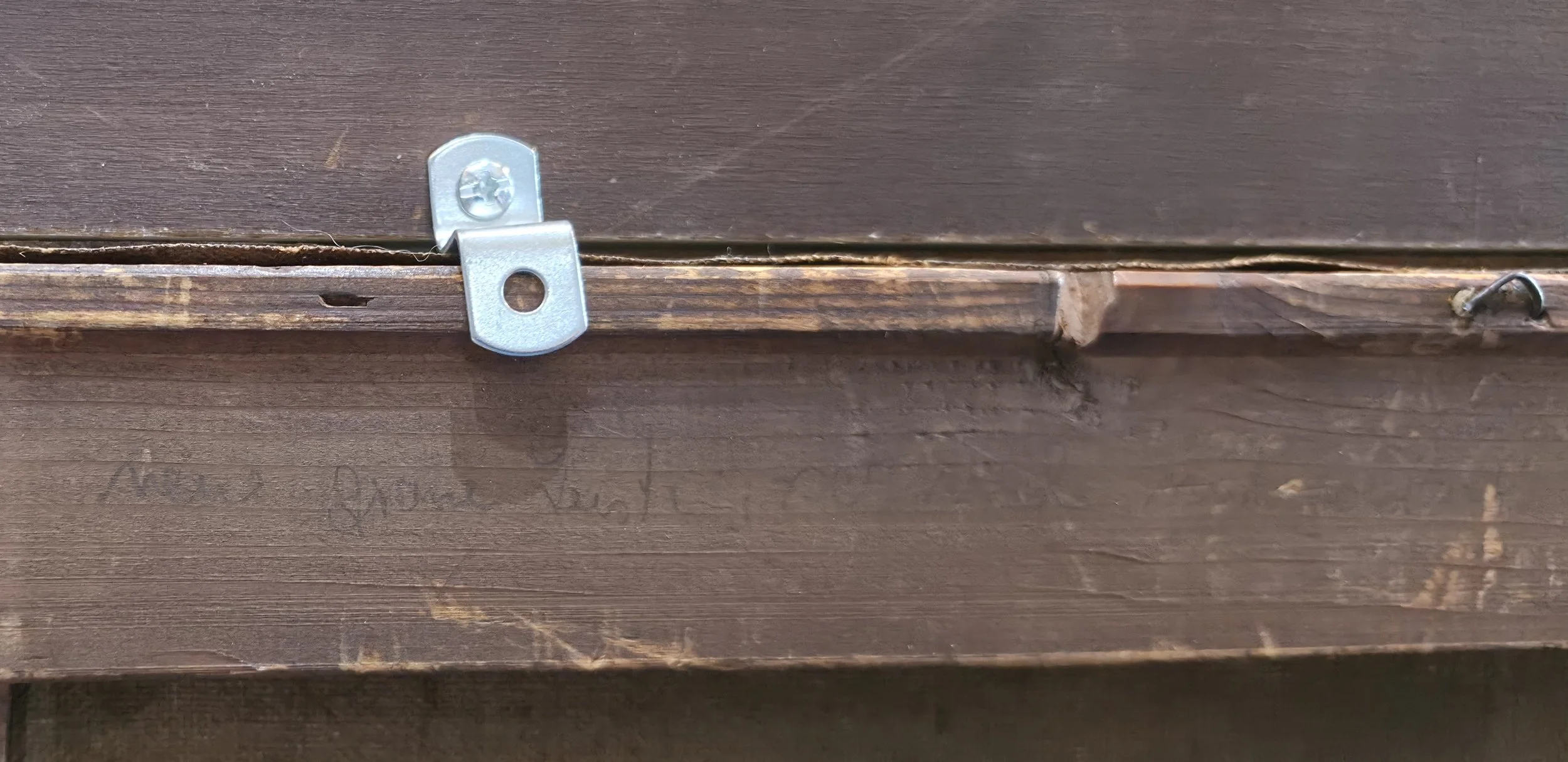
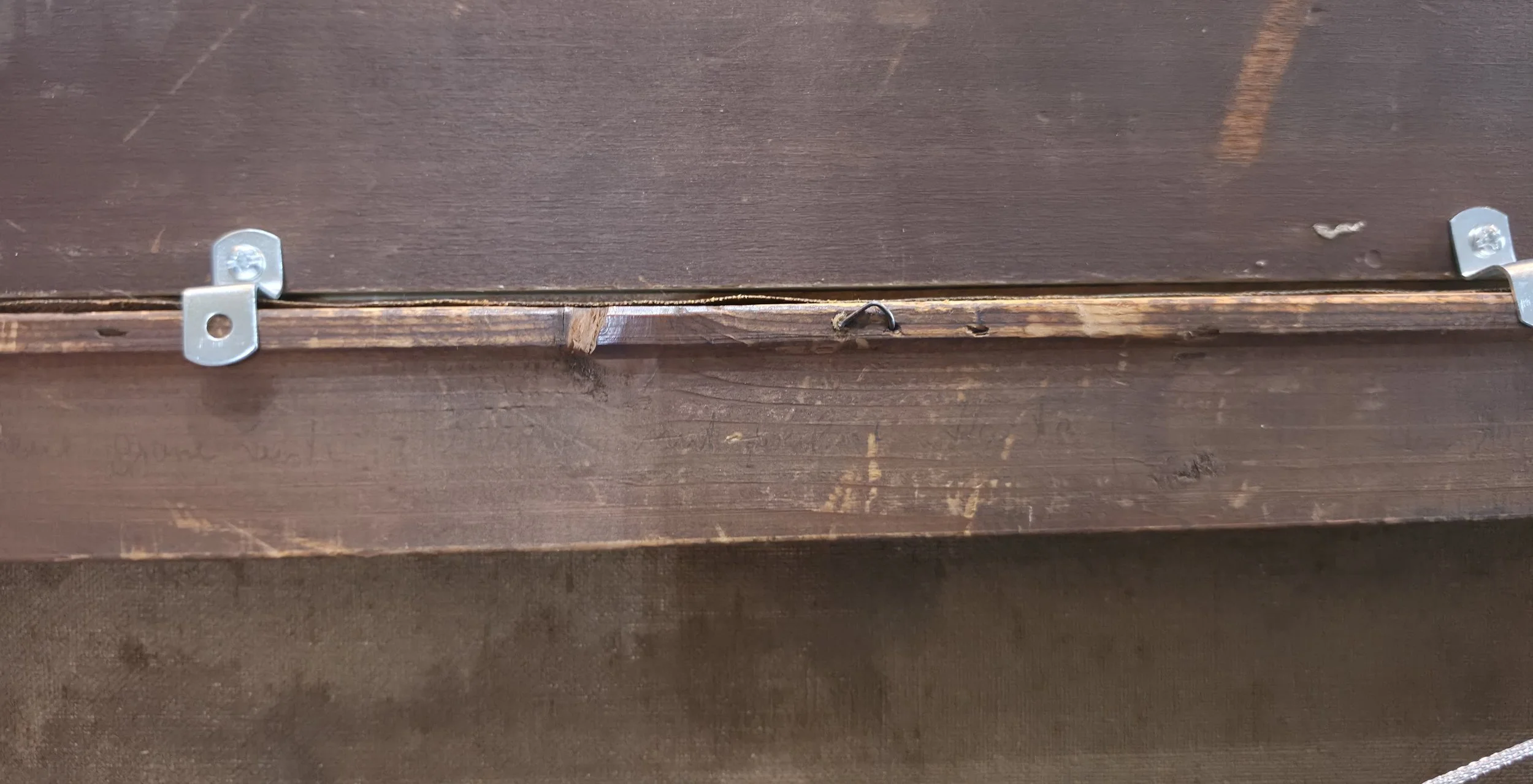
“Meine kleine Freude im Winter mit vielen Jagd”, 1932 (Titled on Verso)
(My Little Joy in Winter Many Days Hunting)
" A Pair of Roe Deer ", 1932
Oil on Canvas
16" x 19 7/8"
Housed in a 3 1/2" Ornamented Period Frame
Overall Size: 22" x 26"
Depth: 3"
This painting is in very good condition. Ready to be hung and enjoyed.
Understanding the Painting:
The male deer depicted features short, upright antlers with three points, which are characteristic of the European roe deer (Capreolus capreolus). Roe deer hold a significant place in German forest culture, hunting traditions, and Alpine or Bavarian imagery. Paintings of this type were frequently produced for hunting lodges, rural homes, inns, forest guesthouses, and decorative middle-class interiors in Germany and Austria during the interwar period.
The snowy setting and close-up composition impart a gentle, sentimental naturalism to the painting, in contrast to the dramatic hunting scenes often depicted in earlier works. This softer approach gained particular popularity during the 1920s and 1930s.
The palette is muted and earthy, consisting of creams, warm browns, and gray-greens, which is consistent with Central European decorative painting of the 1930s.
This type of painting is part of a longstanding tradition of German animal art associated with hunting culture (Jagdmalerei), romantic forest imagery, and Biedermeier-influenced naturalism. It represents the conservative representational tradition that remained highly popular in German-speaking Europe between the World Wars.
The title conveys a distinctly Germanic-romantic sensibility. Its sentimental tone aligns with the broader tradition of Heimatkunst (homeland art). This cultural context strongly suggests that the work is almost certainly German or Austrian in origin. The deer are depicted with softness and emotional warmth rather than strict zoological realism, which is more characteristic of decorative Heimat painting traditions than of academic natural history illustration.