
Home of Dubose Heyward, Charleston, circa 1930 by Elizabeth O'Neil Verner
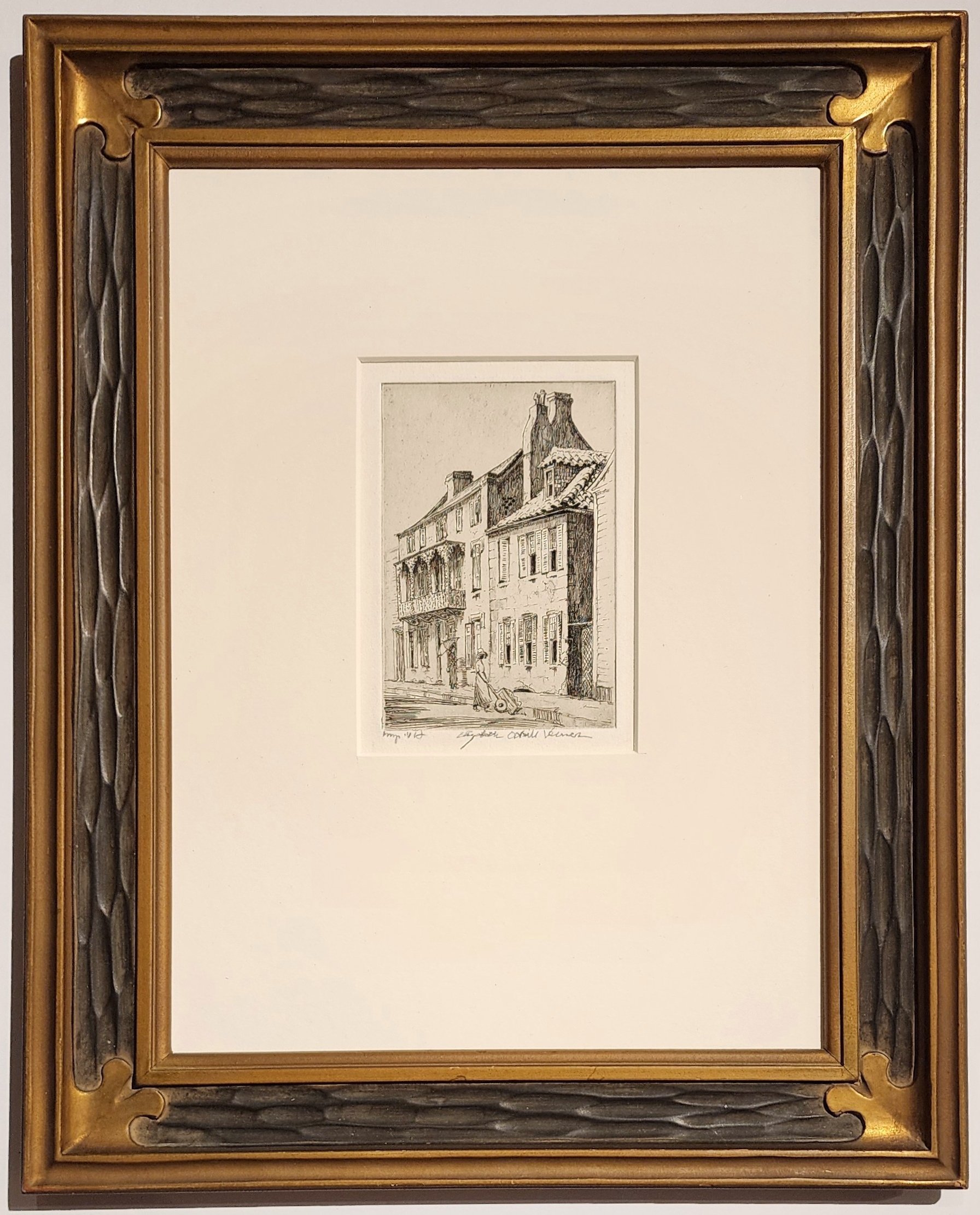
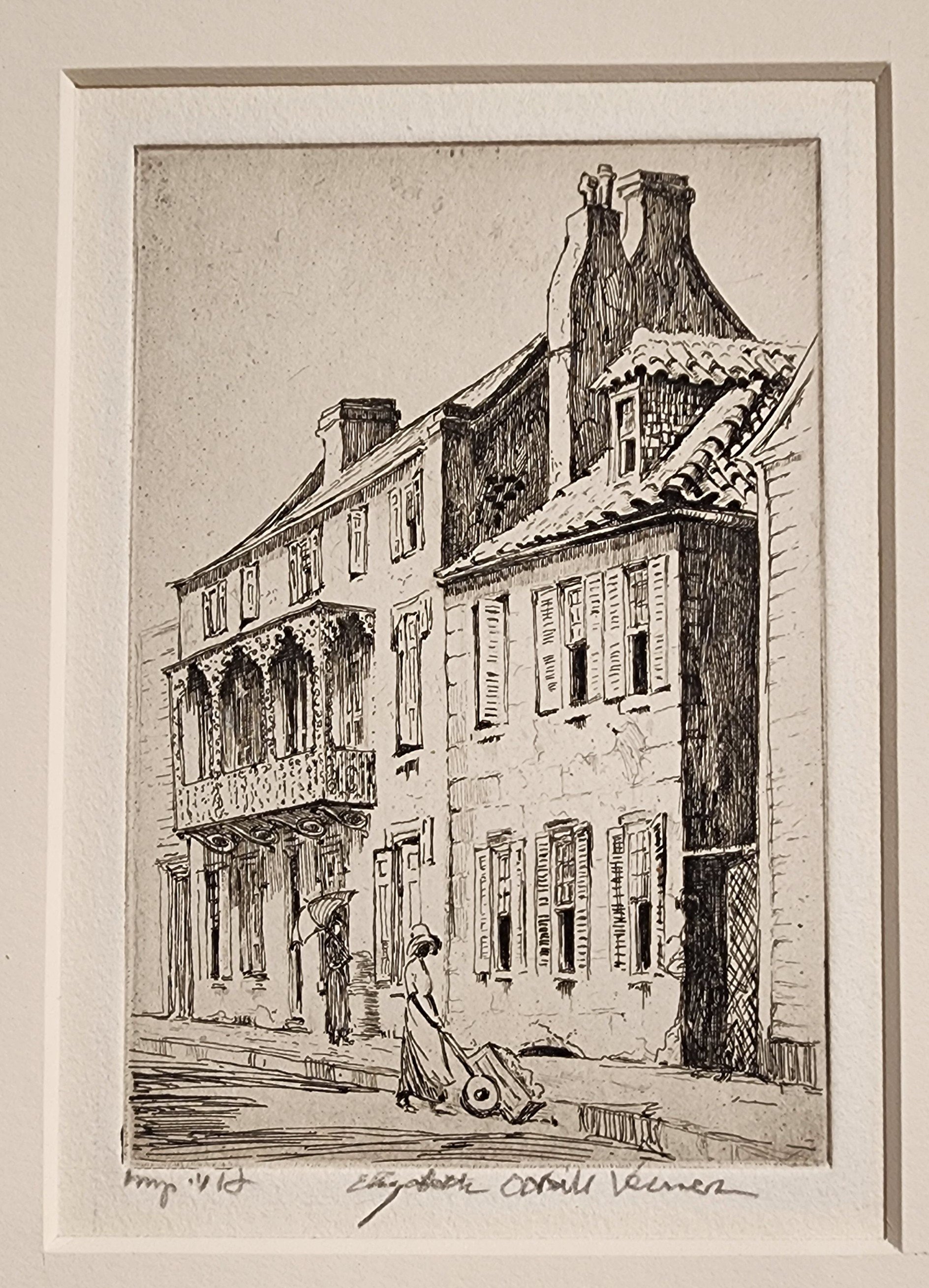
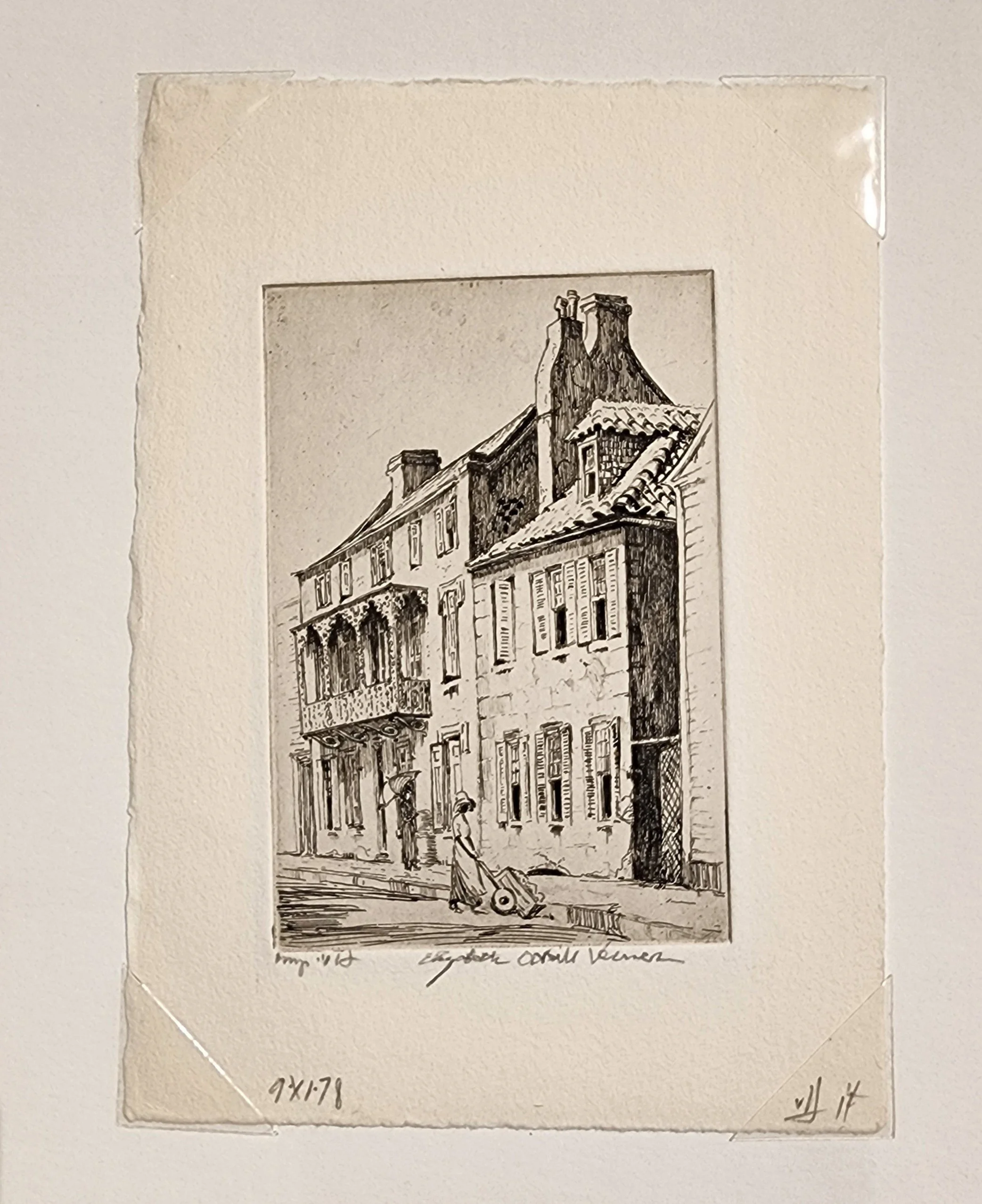
Home of Dubose Heyward, Charleston, circa 1930 by Elizabeth O'Neil Verner
Elizabeth O'Neill Verner (American, 1883 - 1979)
Signed: Elizabeth O'Neill Verner (in pencil, lower, right)
" Home of Dubose Heyward, Charleston ", circa 1930
Imp. V 12, (in pencil, Lower, Left)
Etching
5" x 3 3/8" plate size
8" x 5 1/2" sheet size
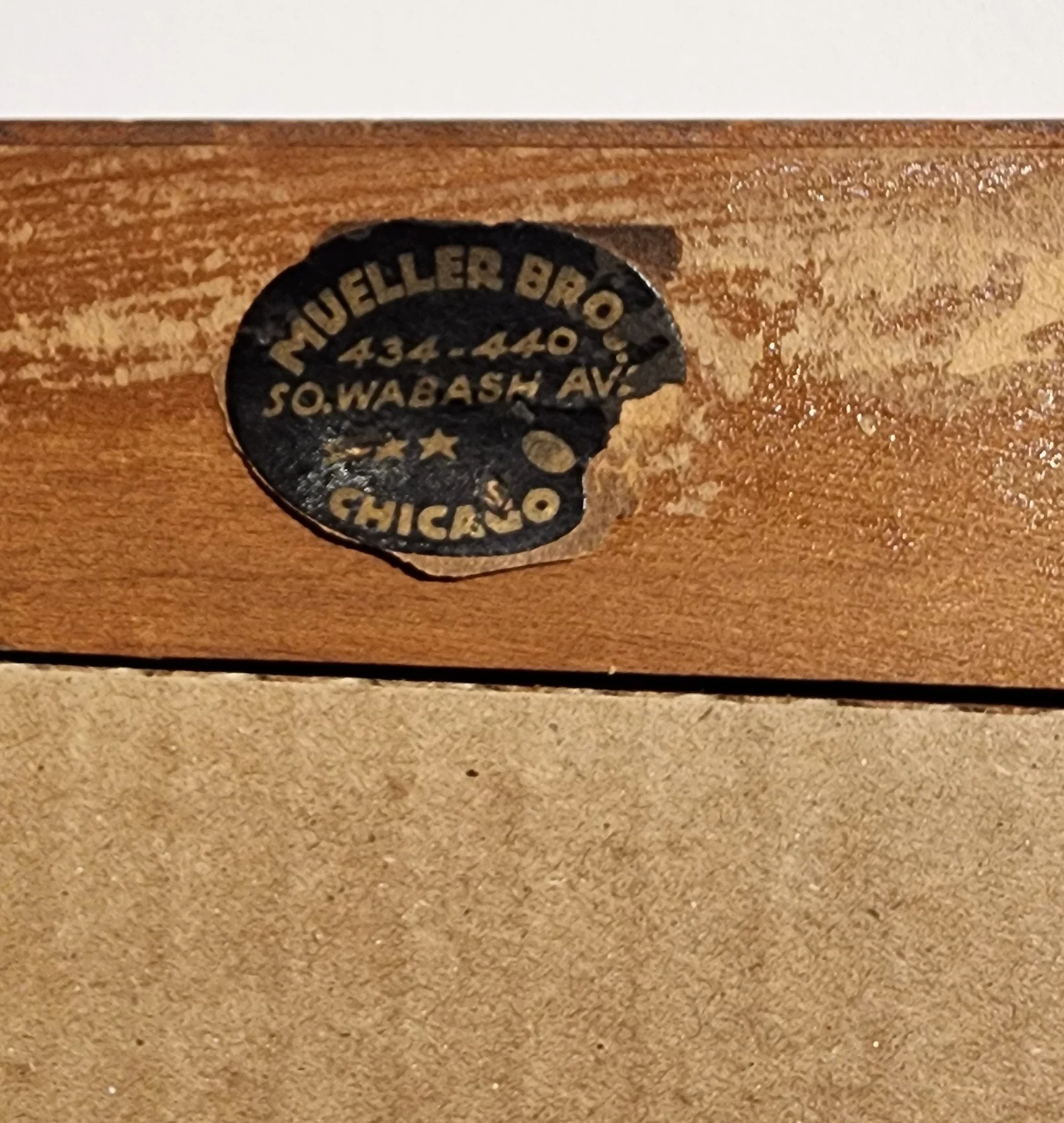
Housed in a 2" Period Carved Frame
Overall Size: 16 1/2" x 13 1/4"
This original print is in excellent original condition. A nice presentation, ready to be hung and enjoyed.
DeBose Heyward (Am. 1885-1940) was a native of Charleston. And lived there until the mid-1930s. Author of the novel. " Porgy ", published in 1925.
Artist Biography:
A leader in establishing Charleston, South Carolina as a dynamic cultural center, Elizabeth Verner depicted the historic city's seemingly endless supply of subject matter including lush landscape, architectural landmarks, and local people. Many of her paintings were pastel on silk.
She was also proficient as an etcher and a part of the Charleston Etcher's Club whose members did etchings of Charleston's historic architecture. Their work, published in national media, brought widespread attention to the charms of the area.
She worked especially hard, printing her own plates and selling prints, and during the spring seasons opened her studio to tourists and housed visitors in her home. She also served as a guide to Charleston and wrote and illustrated several books that furthered her own career as well as promoted Charleston as a visitor destination.
When the mayor tried to outlaw flower vendors, she fought to retain these black women who came from outlying areas to sell their flowers and handmade baskets. She wrote: "I wanted the flower women because I painted them and I need them as models" (Magazine Antiques 11/98). These subjects appear regularly in her etchings.
She was also one of the few artists of the Charleston Renaissance to work in pastel, which she pursued after being inspired by an exhibition of floral pastels by Laura Coombs Hills in Boston. From that time, Verner was persuaded that pastels were a more effective medium for conveying her flower vendors.
Her former home and studio from 1938 is now The Elizabeth O'Neill Verner Museum at 79 Church Street in Charleston.
Source:
Martha Severens, "American Art Review"