
A Lovely Bouquet circa 1940s by Hans Paap
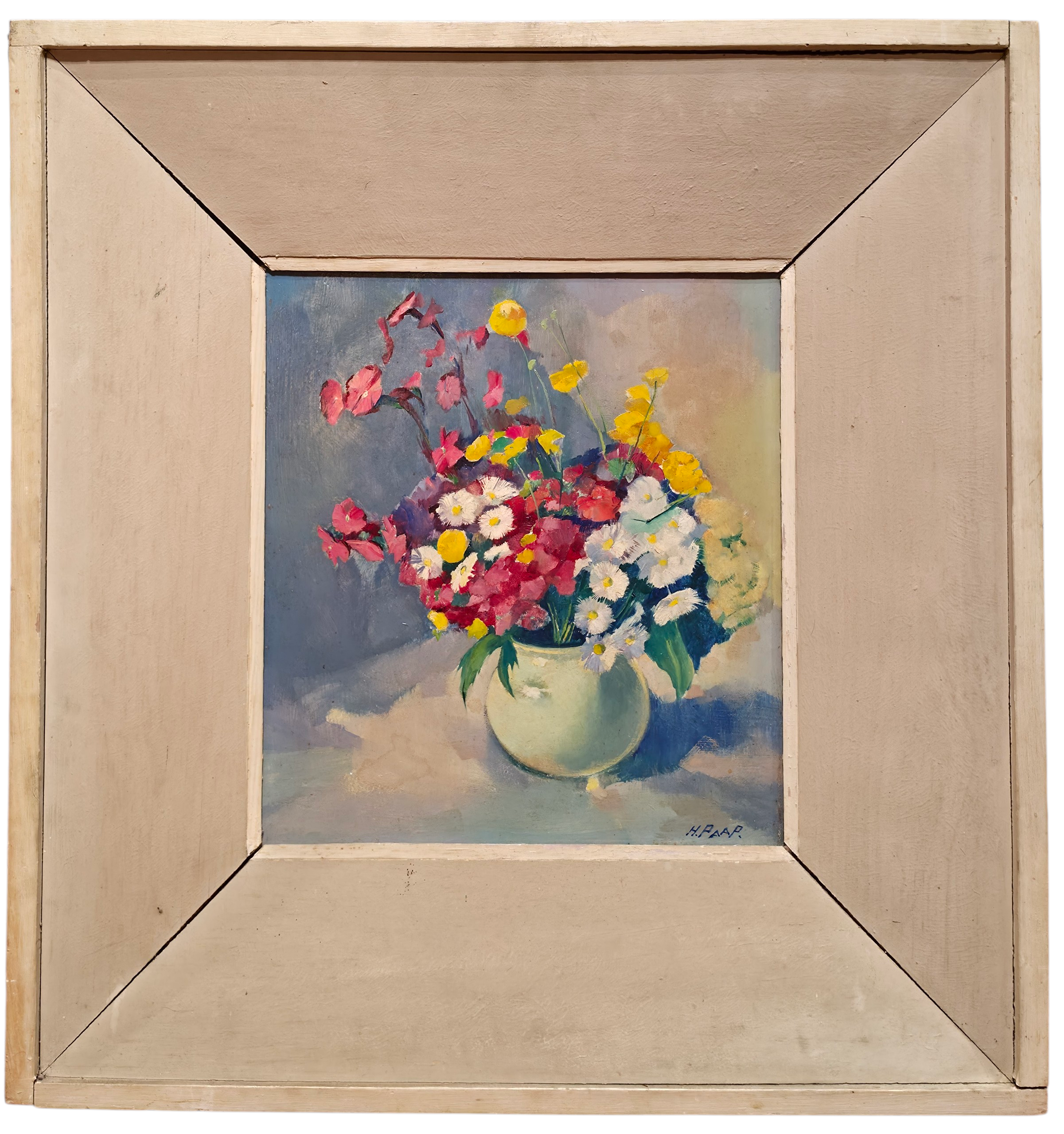
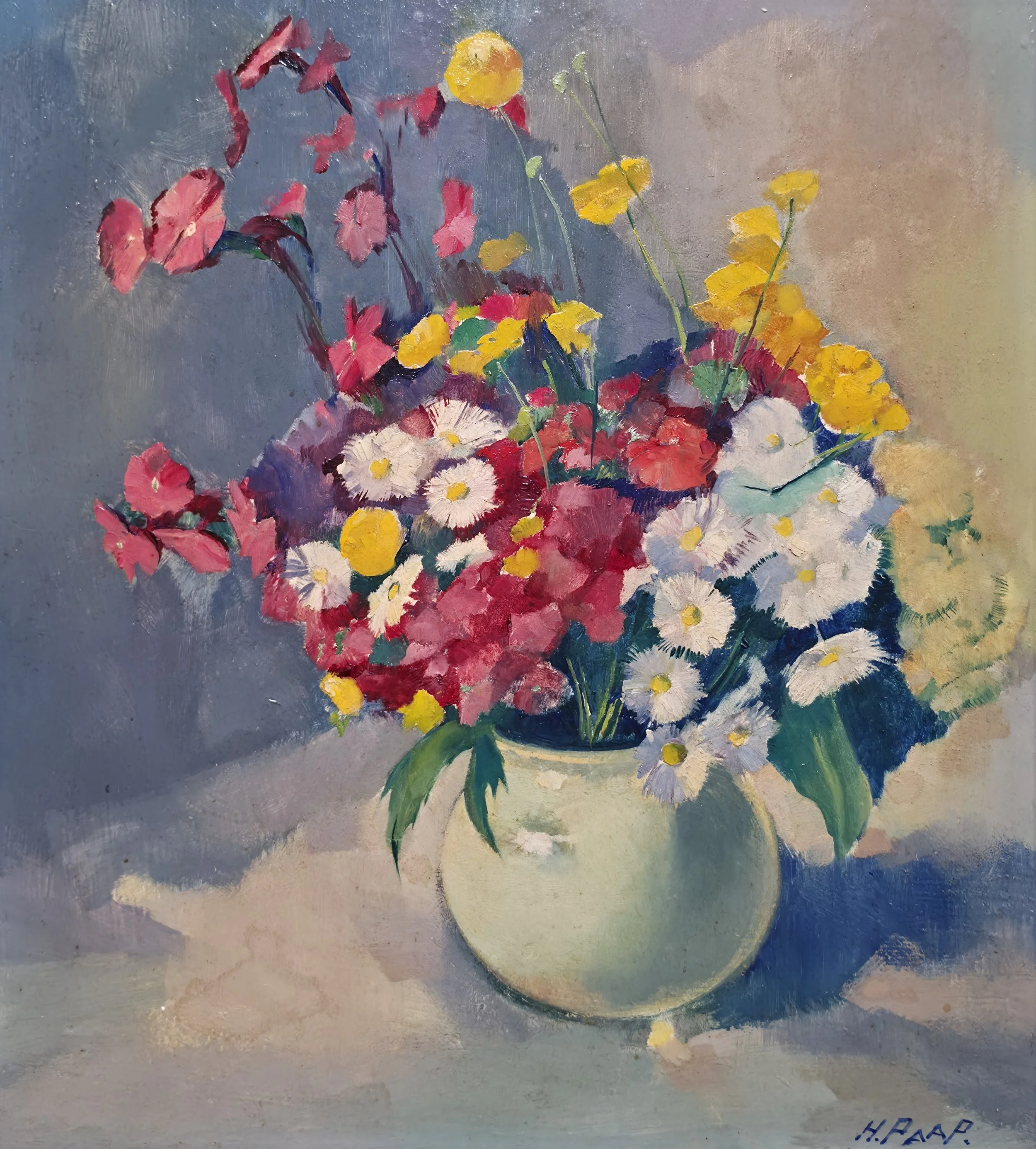
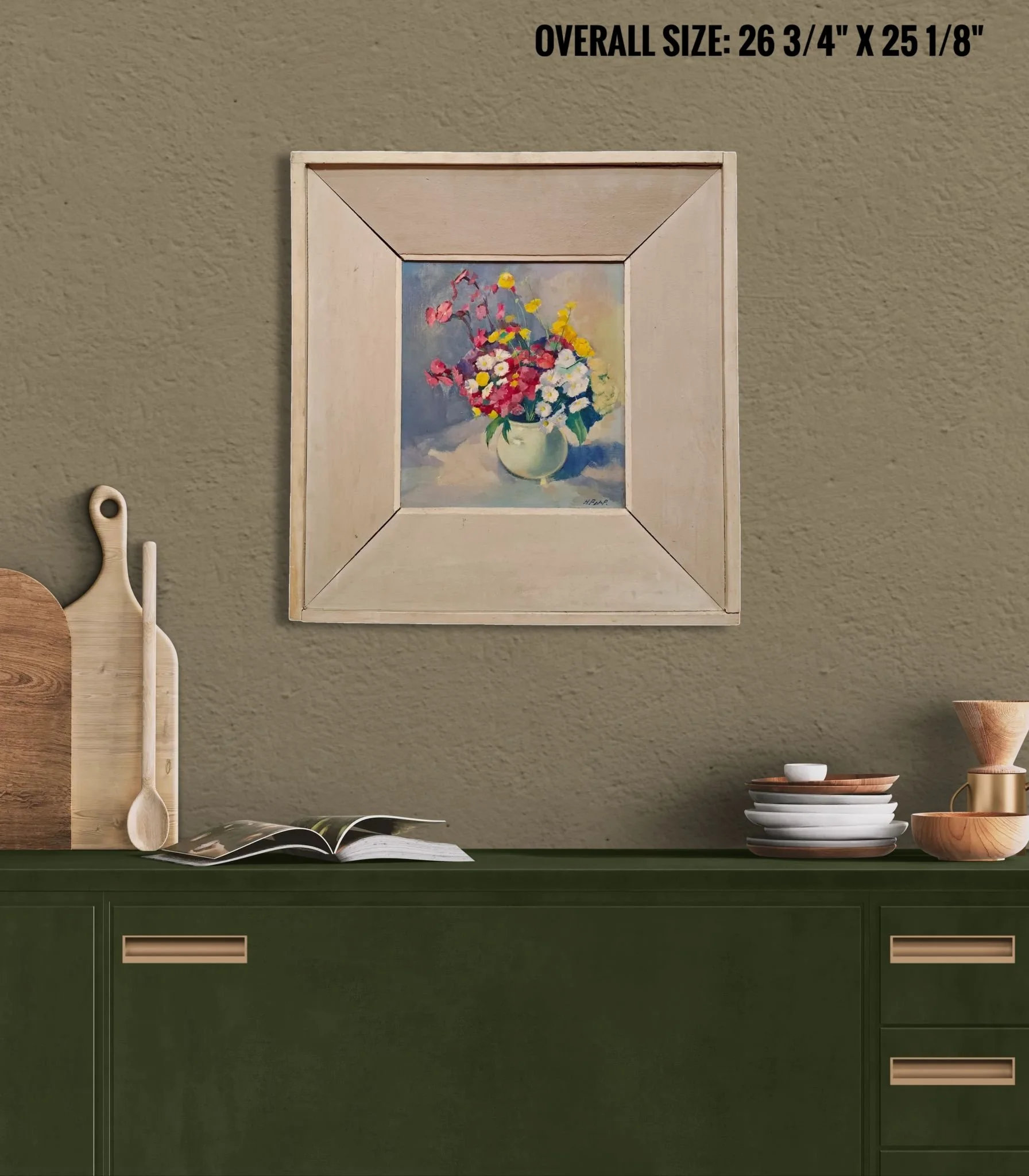
A Lovely Bouquet circa 1940s by Hans Paap
Hans Paap (German/American, 1890-1967)
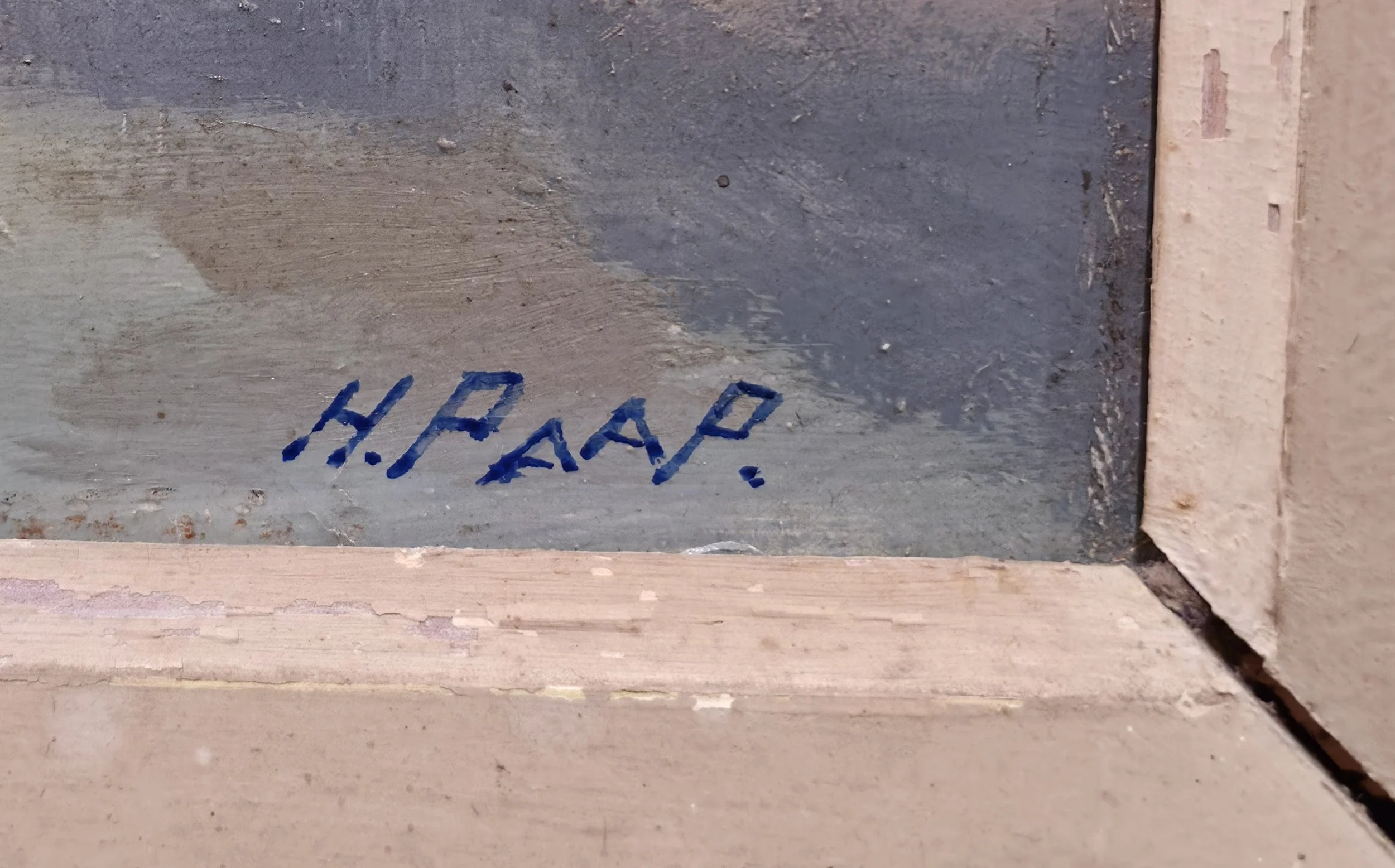
Signed: H. PAAP. (Lower, Right)
" A Lovely Bouquet ", circa 1940s
Oil on Masonite
15 1/2" x 13 3/4"
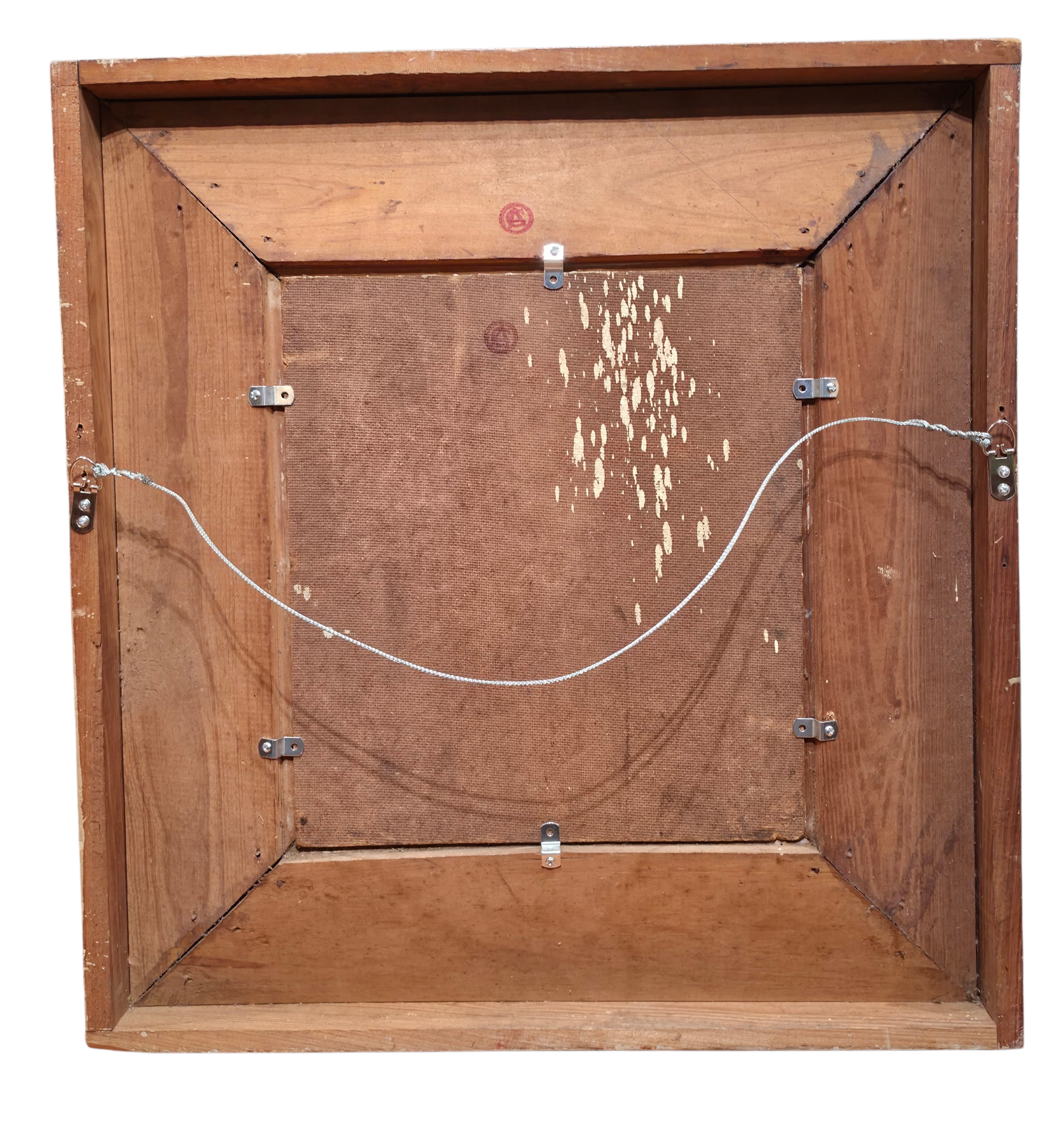
Housed in its original 6 1/4" Artist-Made Frame
Overall Size: 26 3/4" x 25 1/8"
The painting is in overall very good original condition.
A lovely “garden bouquet” combining several cottage-garden flowers for color harmony. Gathered from a meadow or garden edge.
The white flowers with yellow centers appear to be daisies or feverfew. The bright yellow round blooms resemble buttercups or small ranunculus flowers. The pink/red flowers on thin stems could be sweet peas or phlox. The pale blue clustered flowers may be hydrangea or delphinium-like blooms. The large pale yellow bloom on the right resembles a carnation or peony painted very loosely.
Hans Paap, born in Germany, was a world traveler who worked as an artist in Argentina, Brazil, Mexico, Portugal, the Dominican Republic, and in the United States, including Los Angeles, Taos, and New York.
According to author Bess Murphy, Paap studied at the Royal Academy of Fine Arts in Munich before moving to Veracruz, Mexico in his early twenties to “study and work in lithography, textiles, fabric painting, and leatherwork.” He later worked briefly as a filmmaker in the emerging German film industry around World War I.
Paap’s extensive travels and “near nomadic” lifestyle are reflected in his paintings. His works from the 1920s show clear influences of late Impressionism, early Cubism, and Fauvism, as he focused on portraits and landscapes. By 1928, Paap had moved to Los Angeles, where he exhibited works that Murphy describes as his “evolving style,” aligning with post-Impressionist early European and American modern painters. An LA Times article from this period quotes Paap as saying he intended his new work to “embody [his] conception of American life and energy.”
Although Paap’s portraits and landscapes from other regions were well received, his most iconic work was created in New Mexico. As Murphy notes, “Paap’s personal life and career was defined by his experience in Taos.“ When Paap arrived around 1929, the Taos Society of Artists had already disbanded, but their legacy had established the area as an international art colony. This reputation attracted a new generation of artists and cultural figures, including Georgia O’Keeffe, John Sloan, Rebecca Salsbury James, and John Marin. Paap became friends with several former TSA members, such as Kenneth Adams, E. Martin Hennings, and Walter Ufer.
The artists, landscape, and people of the region profoundly influenced Paap. As Murphy notes, his portraits and landscapes from this period were “driven by a deeply romantic, exotic view of Northern New Mexico and its inhabitants.” Paap’s initial stay in Taos lasted only a few years, but he returned in 1949 after time in Portugal, displaced persons camps in Germany, and two years on Ellis Island. By 1953, Paap had moved to Hawaii and spent the following years traveling throughout Europe, Mexico, and the United States, including another visit to Taos.
He died in Hamburg, Germany, in 1967.