
Hans Van Der Bloom, 1972 by James Gayne Chenoweth
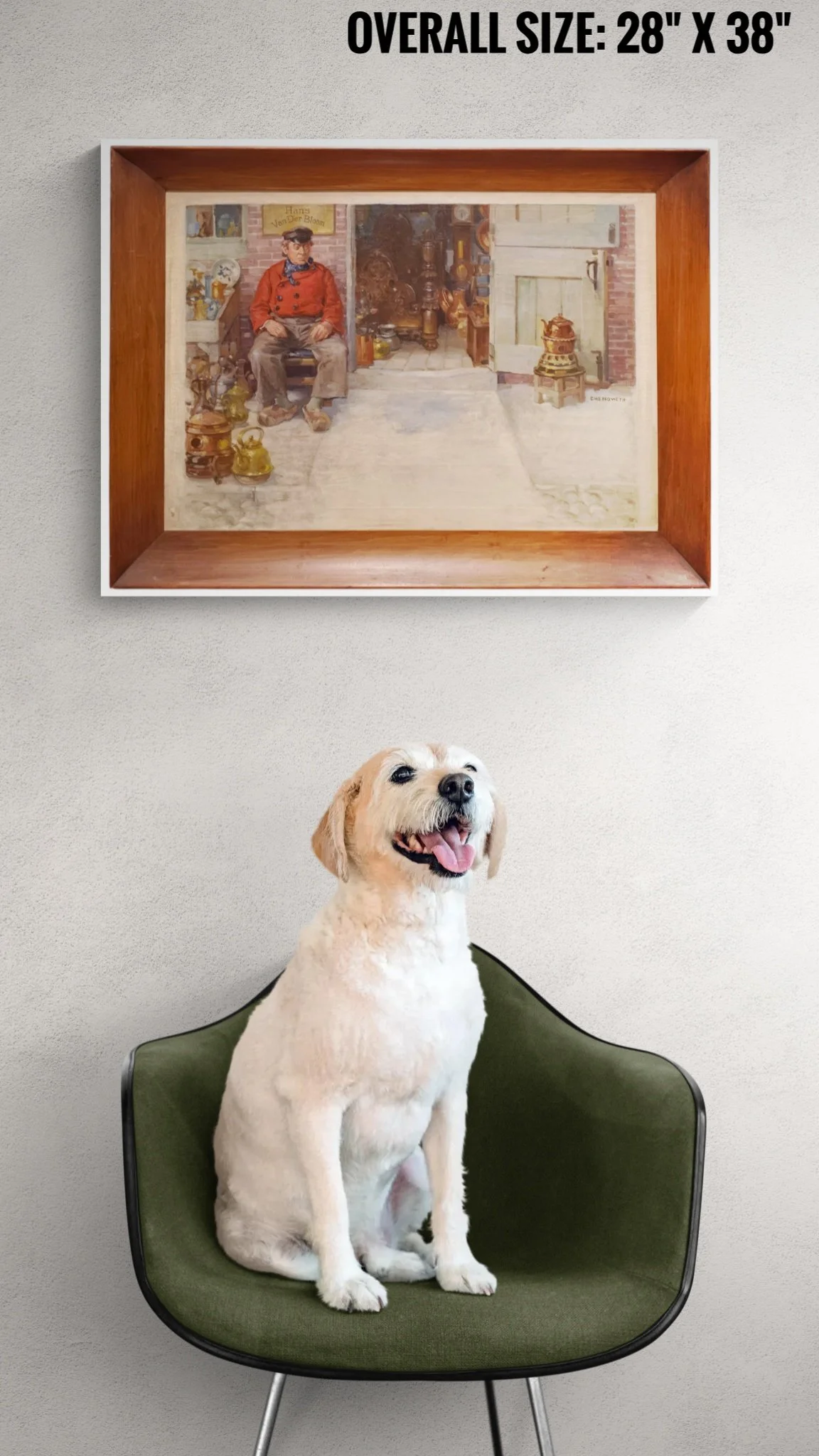
Hans Van Der Bloom, 1972 by James Gayne Chenoweth
James Gayne Chenoweth (American, 1890-1967)
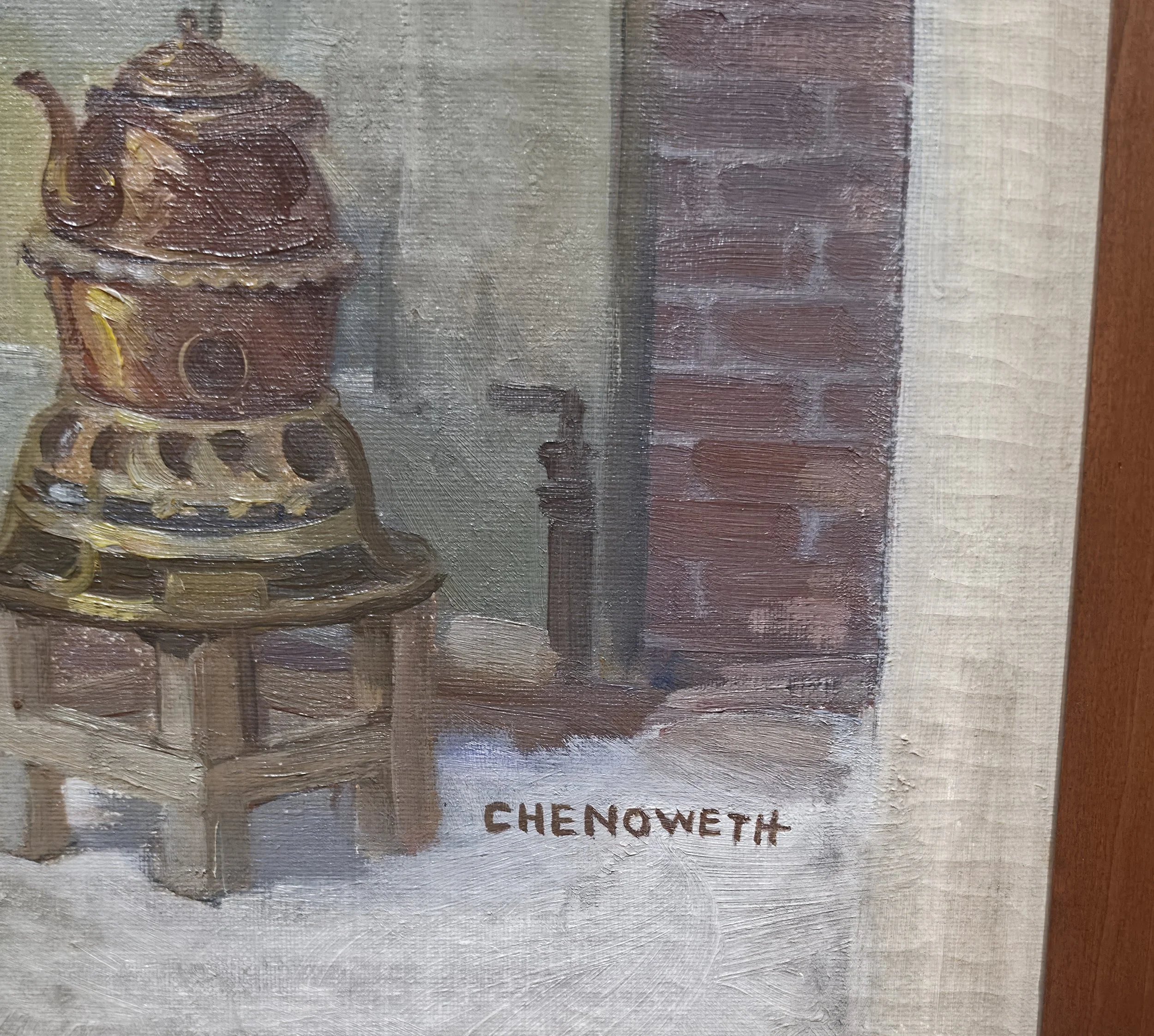
Signed: Chenoweth (center, right)
" Hans Van Der Bloom ", 1927
(titled upper, left)
Oil on canvas
23" x 33"
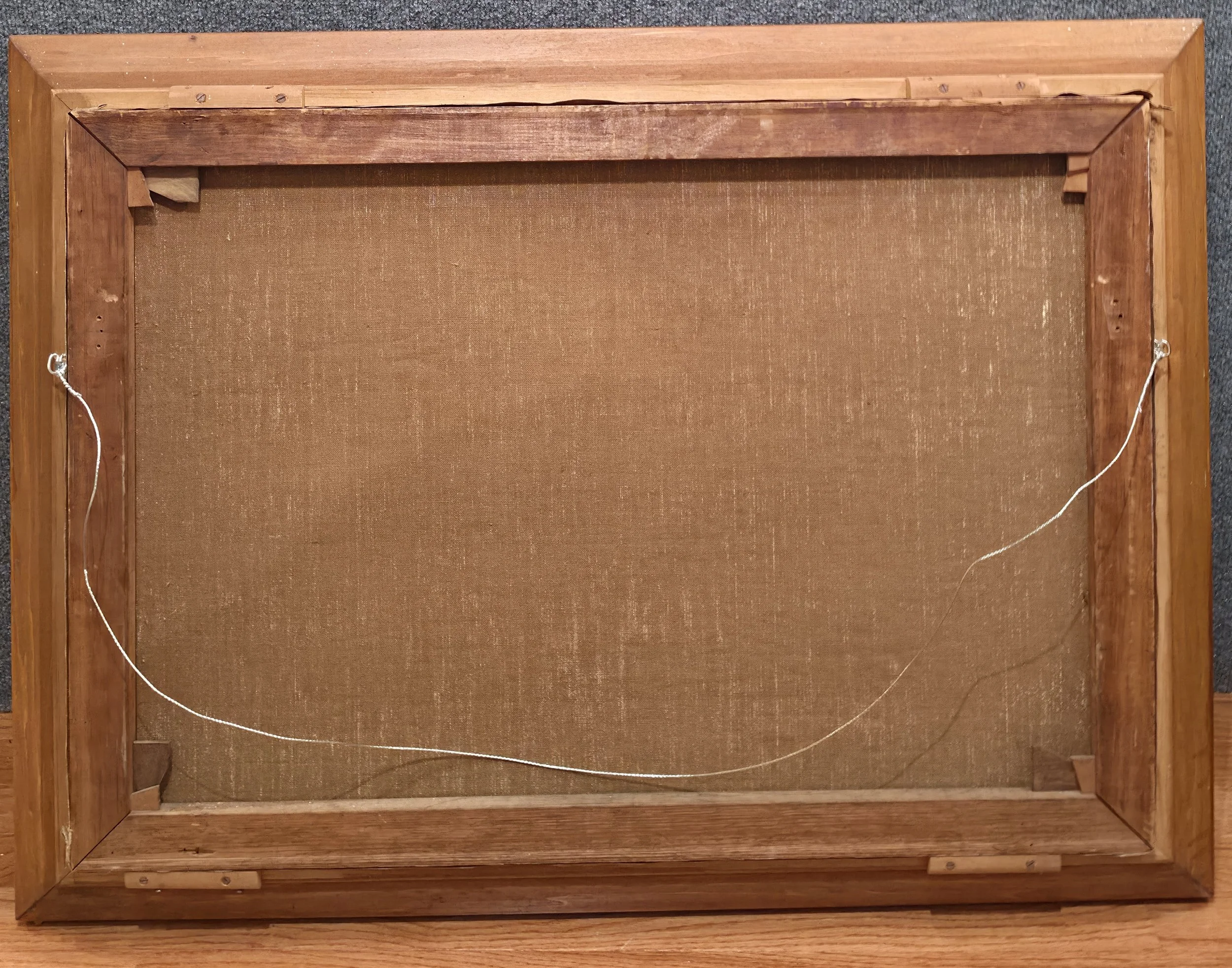
Housed in a 3-inch period coved hardwood frame with a warm, reddish-brown finish
Overall Size: 28" x 38"
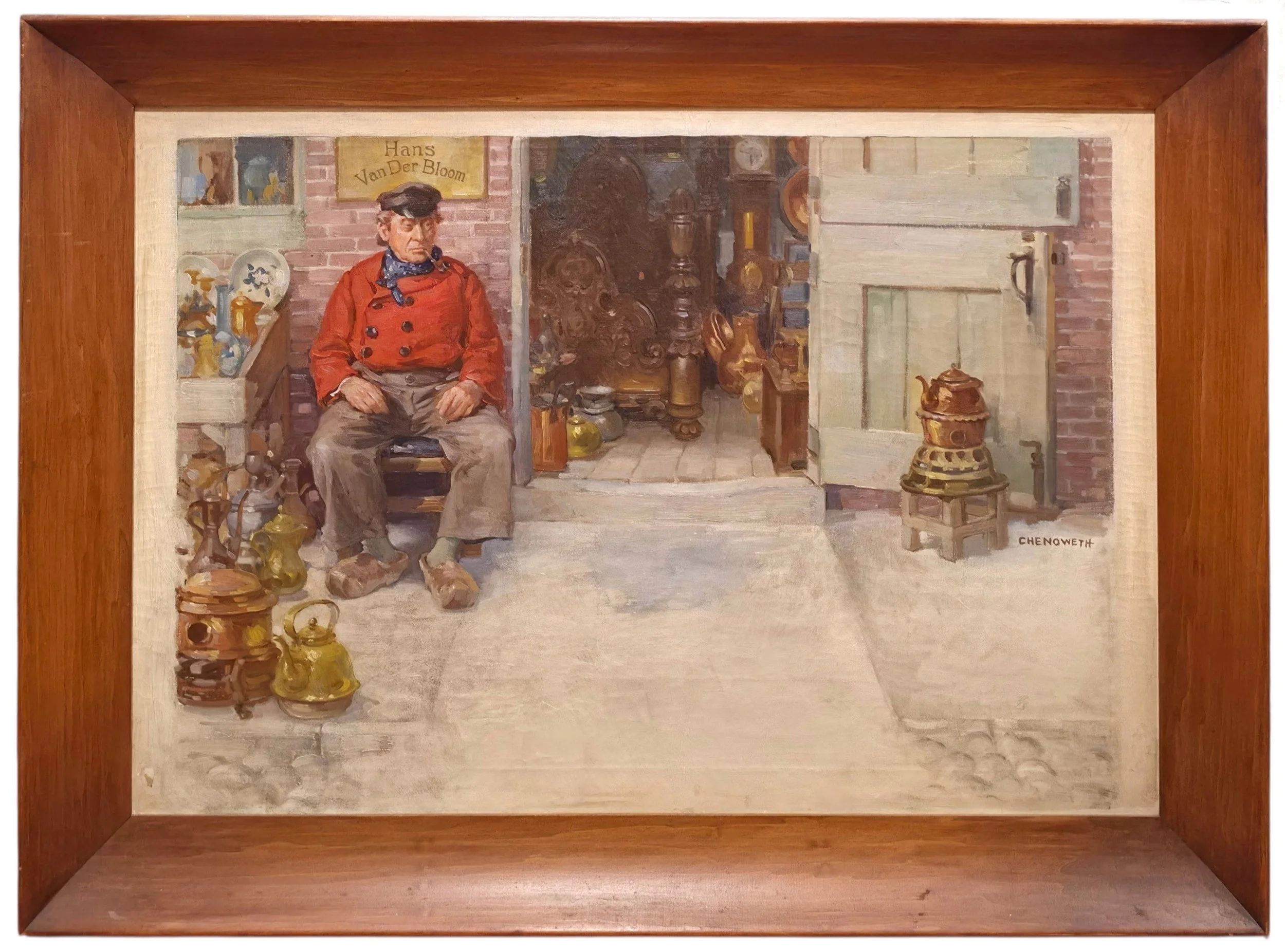
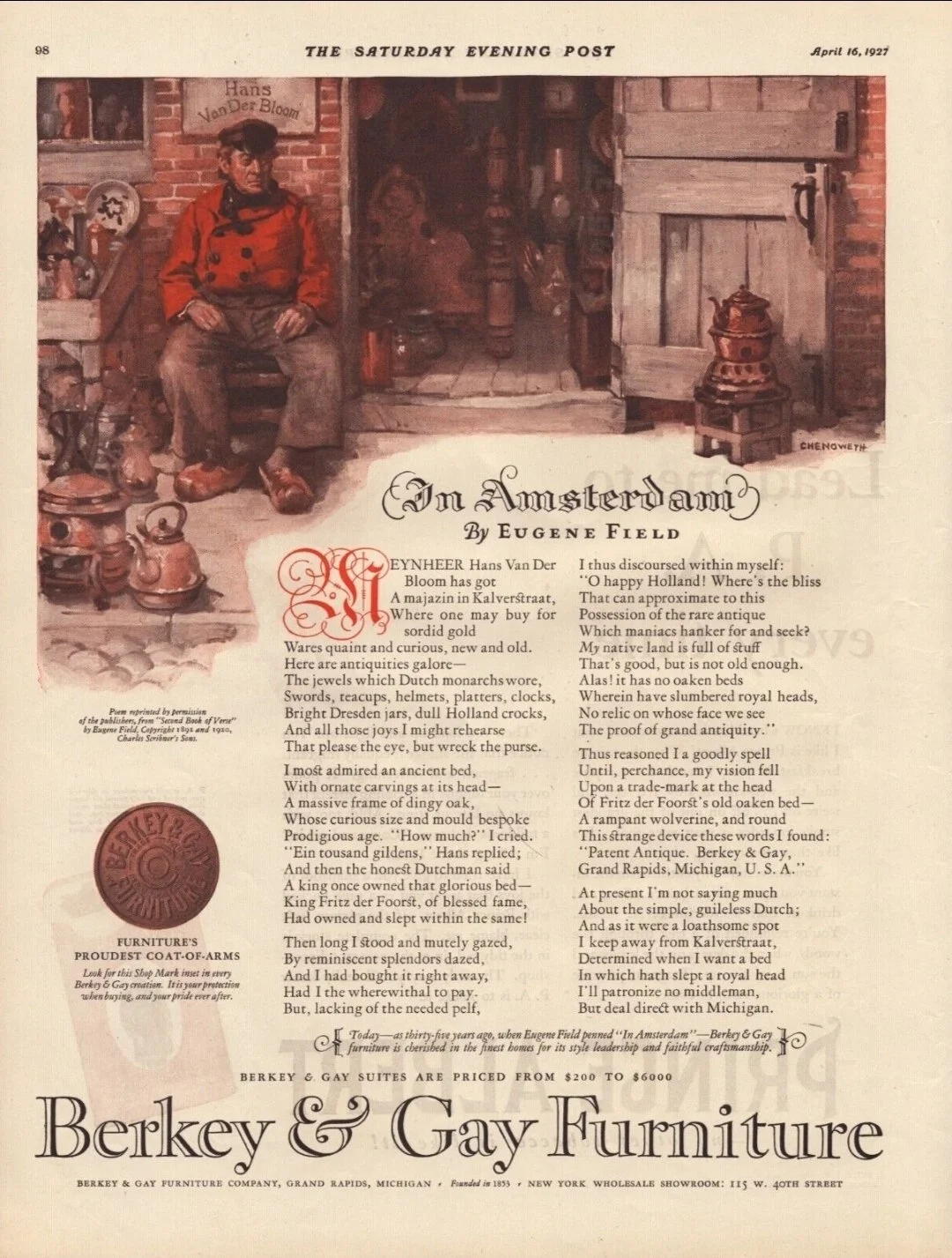
Original illustration for a full-page Berkey & Gay Furniture Company advertisement published on page 98 of The Saturday Evening Post, April 16, 1927. The advertisement featured Eugene Field's poem In Amsterdam, accompanied by Chenoweth's painting depicting the poem's central character, Hans Van Der Bloom.
**An original page from the April 16, 1927 issue of The Saturday Evening Post, featuring the published advertisement, is included with the painting.
Understanding the Painting
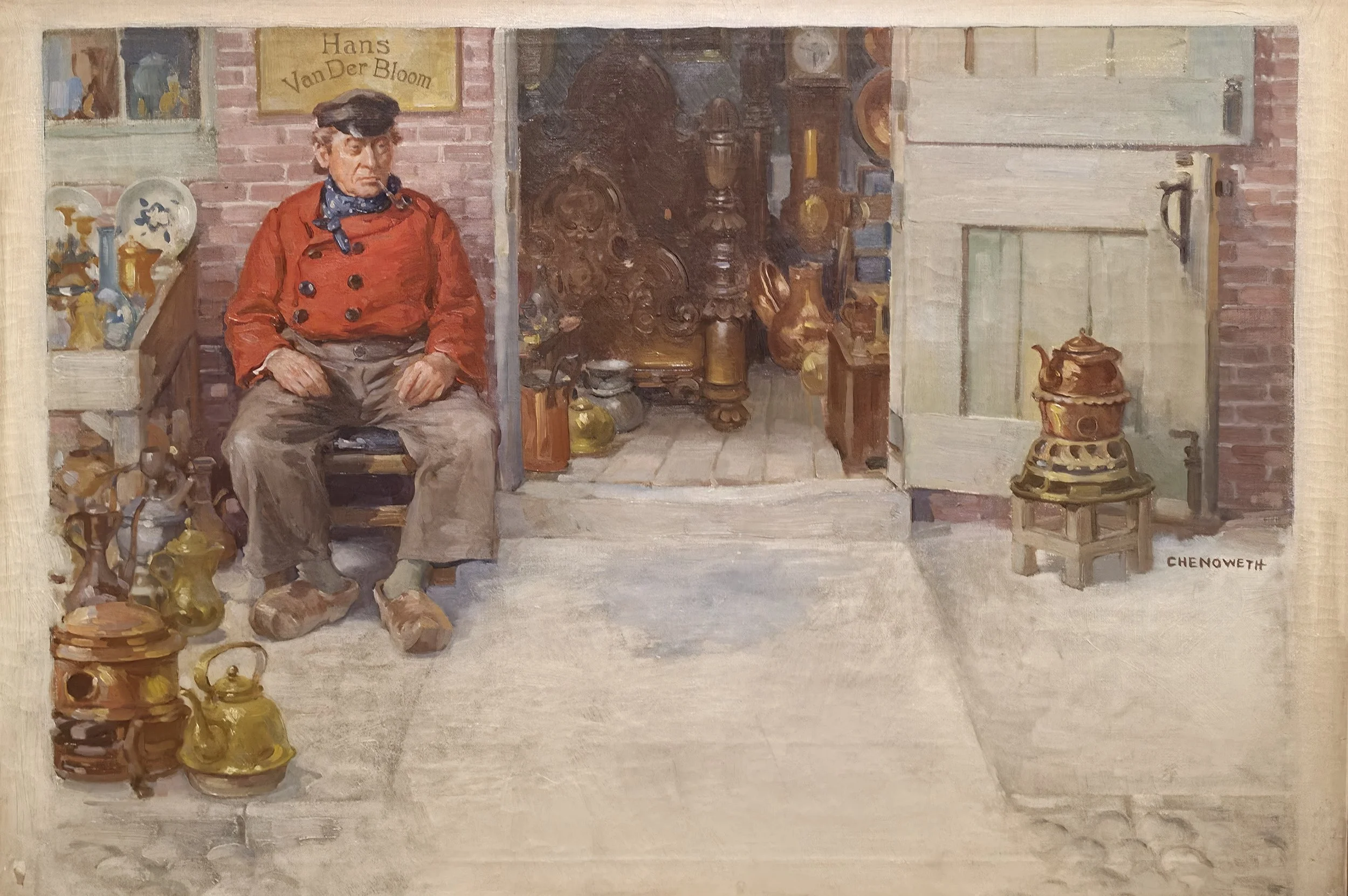
Painted in 1927, Hans Van Der Bloom depicts an elderly Dutch antiques dealer seated outside his shop, surrounded by an assortment of copper, brass, and ceramic wares. Dressed in a distinctive red coat, the proprietor sits beneath a sign bearing his name, while the open doorway reveals a richly furnished interior. Chenoweth's attention to architectural detail, period objects, and the character of his subject evokes the atmosphere of an old-world Amsterdam antiques shop.
The painting illustrates Eugene Field's humorous poem In Amsterdam, in which a visitor to Hans Van Der Bloom's shop becomes captivated by an elaborately carved antique bed, only to discover an unexpected connection to the American furniture manufacturer Berkey & Gay. Chenoweth brings Field's fictional shopkeeper and his curious assortment of merchandise to life, lending a visual identity to the poem's central character.
The painting was reproduced in the April 16, 1927 issue of The Saturday Evening Post, appearing on page 98 in a full-page advertisement for the Berkey & Gay Furniture Company of Grand Rapids, Michigan. The advertisement cleverly paired Field's literary humor with Chenoweth's illustration to promote the company's craftsmanship and furniture.
About the Artist
Joseph Gayne Chenoweth (American, 1890–1967) was an accomplished illustrator, painter, and muralist whose career encompassed commercial advertising, magazine illustration, portraiture, and decorative painting.
Born in Shoals, Indiana, Chenoweth studied at the John Herron Art Institute in Indianapolis before attending the Cincinnati Art Institute in 1912, where he studied under the distinguished American painter Frank Duveneck. He continued his artistic education at the Art Institute of Chicago while working as a staff artist for the Thomas Cusack Advertising Company and became associated with Chicago's Palette and Chisel Club.
During the 1920s, Chenoweth established himself as a versatile professional artist, receiving mural commissions and producing illustrations for commercial and publishing clients. In 1924, he taught painting at the American Academy of Art in Chicago. His published illustrations included work for The Blue Book magazine and My Bookhouse, the popular children's literary collection, for which he illustrated the cover of Through the Gate in 1920.
By 1927, Chenoweth had established a studio at 40 West 45th Street in New York City and became associated with the New York Guild of Free Lance Artists. His work reflects the strong academic foundations of his training, combining confident draftsmanship, expressive characterization, and a painterly approach to narrative illustration.
Chenoweth died in New York City in 1967, leaving a body of work representative of the close relationship between fine art and commercial illustration during the first half of the twentieth century.