
Lake Michigan Looking North, circa 1950s by Armand Merizon
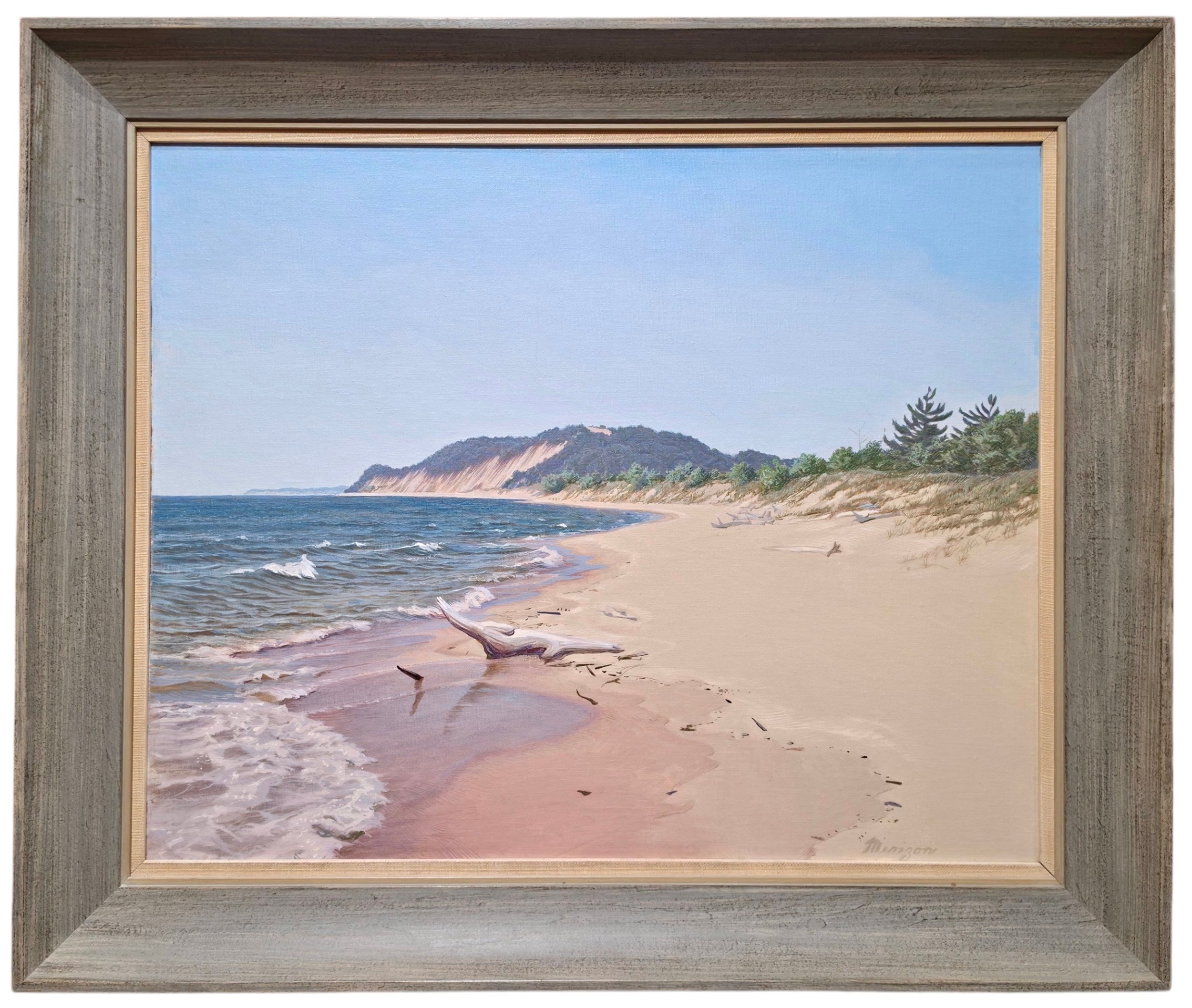
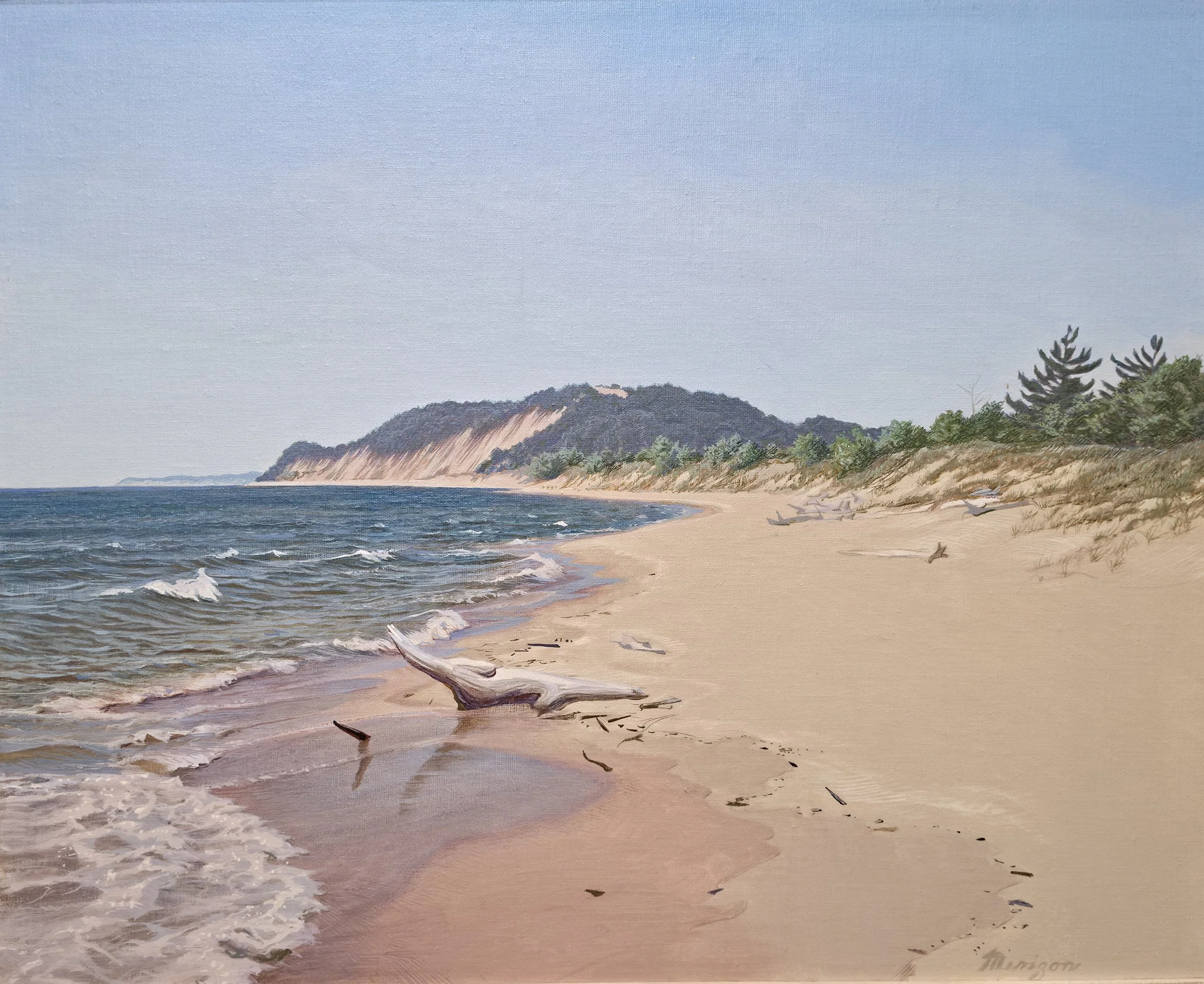
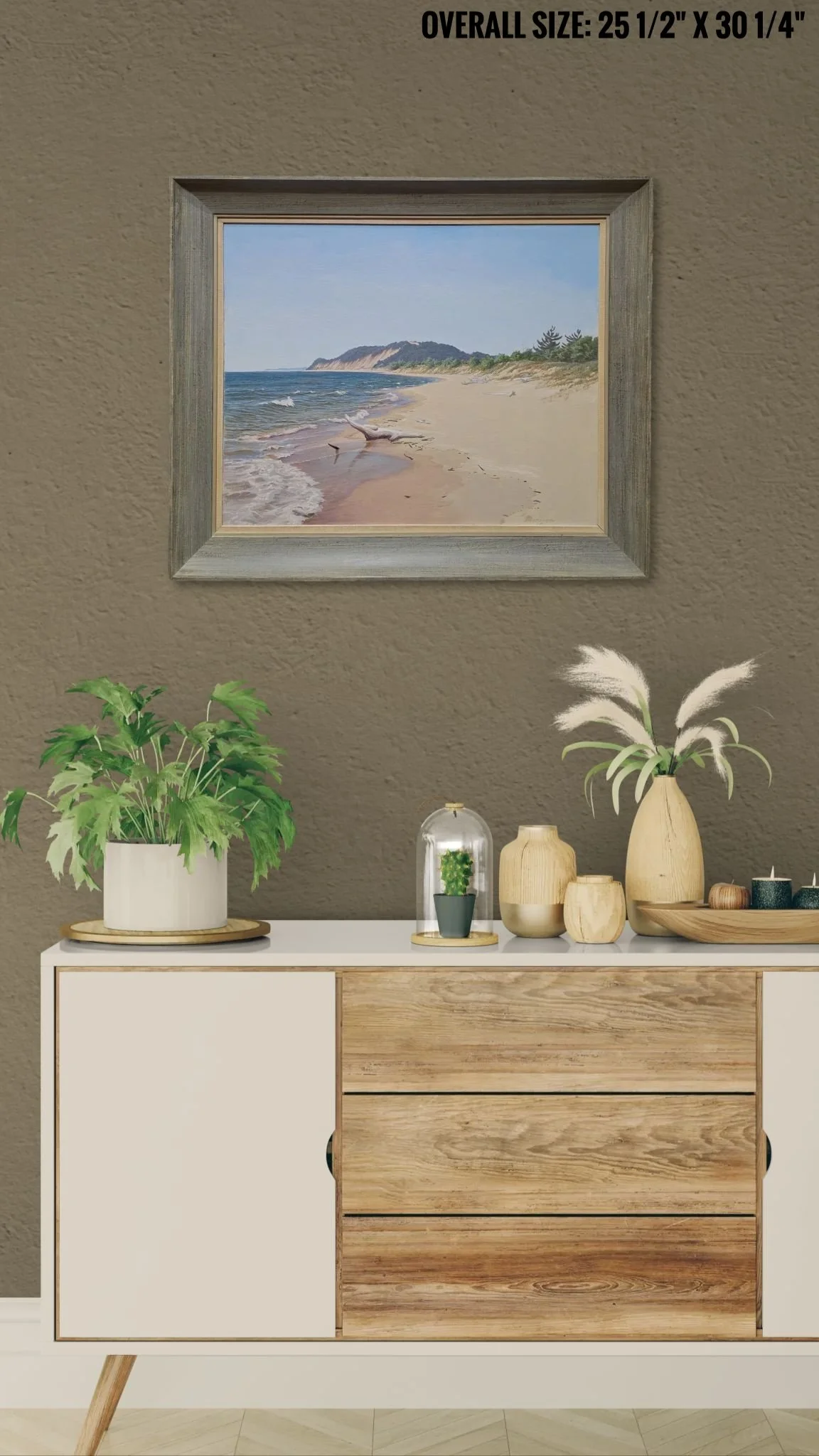
Lake Michigan Looking North, circa 1950s by Armand Merizon
Armand Merizon (American, 1920 - 2010)
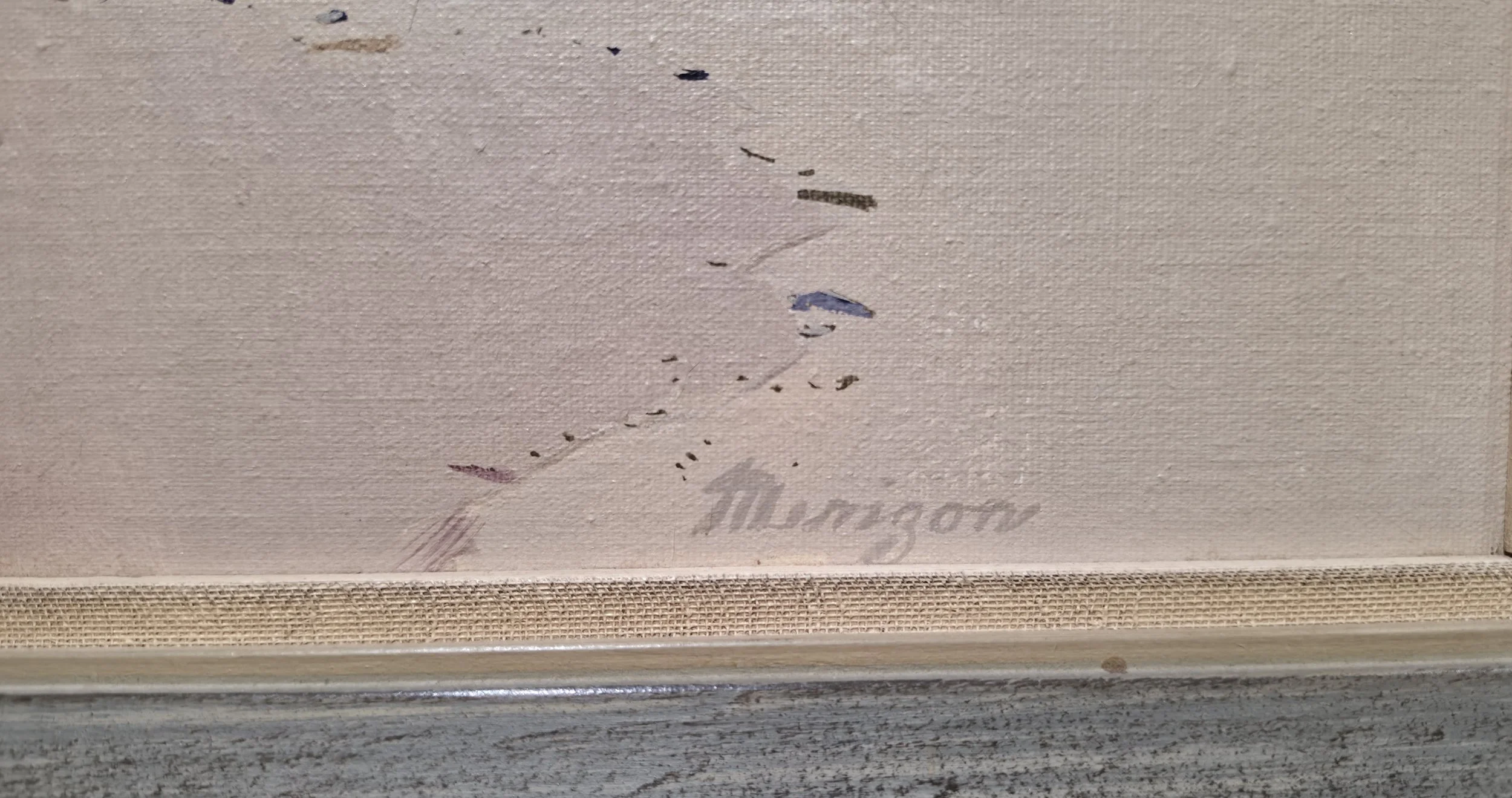
Signed: Merizon (Lower, Right)
" Lake Michigan Looking North ", circa 1950s
(Sleeping Bear Dunes)
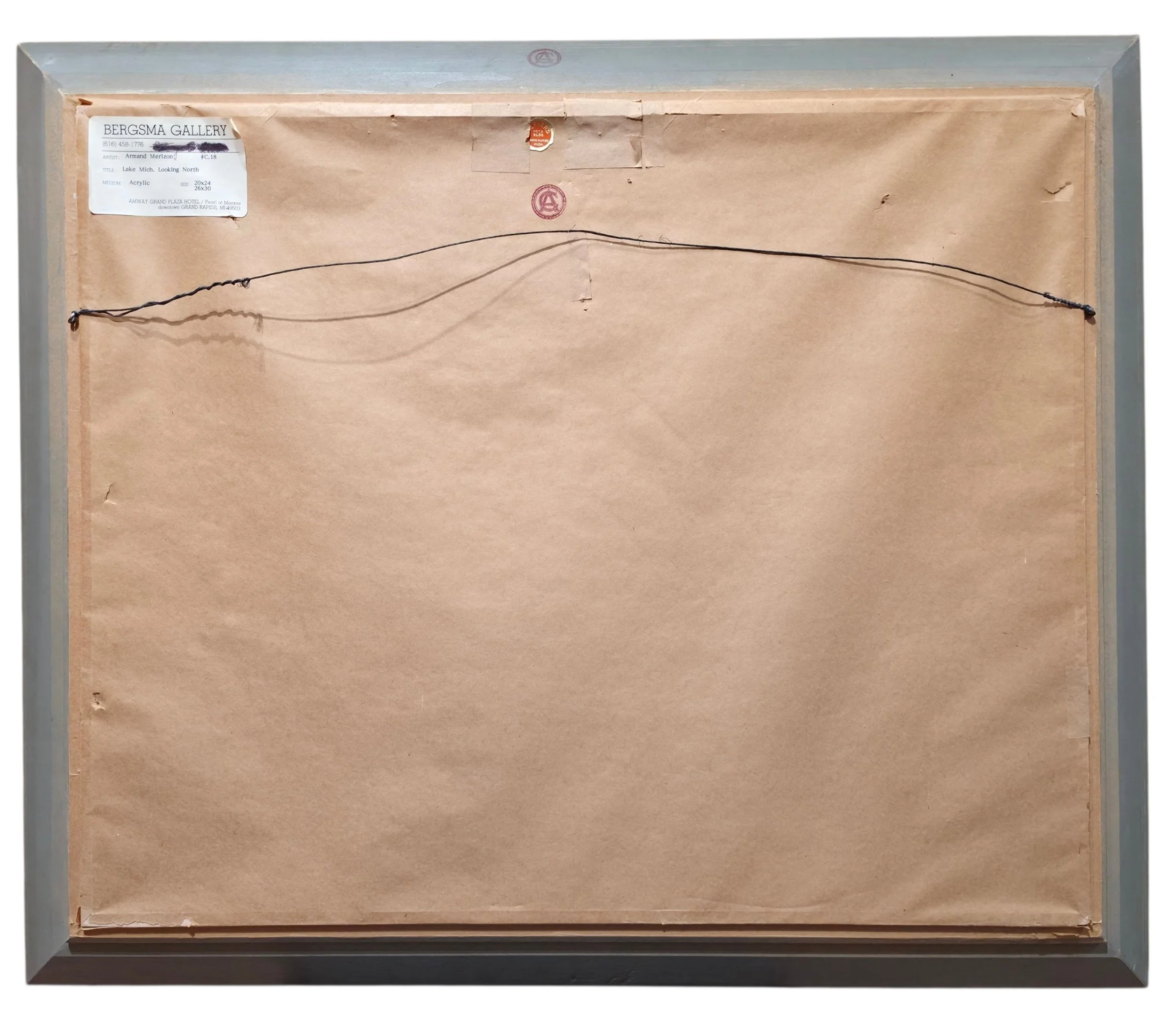
Acrylic on Canvas Board
20" x 24"
Housed in a housed in its original 2 1/4" Frame with a 3/8" Linen Liner
Overall Size: 25 1/2" x 30 1/4"
Armand Merizon captures the quiet beauty of the eastern shoreline of Lake Michigan in this serene mid-century coastal landscape. Executed with soft atmospheric coloration and careful naturalistic detail, the composition emphasizes the calm rhythm of waves, drifting shoreline reflections, and expansive open sky.
The distant dune bluff strongly resembles the shoreline formations of western Michigan, particularly areas associated with Sleeping Bear Dunes.
Merizon’s restrained palette, balanced composition, and sensitive handling of light reflect the traditions of American regional landscape painting of the 1950s. The original frame complements the work exceptionally well, reinforcing the sandy shoreline tones and weathered coastal atmosphere.
Artist Biography:
Armand Merizon was an American painter, educator, and lifelong experimentalist whose career spanned more than seven decades. Born in Kalamazoo, Michigan, and raised in Grand Rapids, Merizon began painting at an early age and earned a scholarship to the Vesper George School of Art in Boston while still a teenager. Although grounded in traditional draftsmanship and observation, he became known as a “painter’s painter,” continually exploring the technical and scientific qualities of paint, color relationships, luminosity, and surface preservation across mediums including oil, acrylic, casein, and tempera.
Merizon’s diverse body of work ranged from Great Lakes landscapes and marine scenes to figure studies, abstractions, still lifes, and rural compositions. His paintings often combined realism with lyrical abstraction, reflecting both careful observation and a deep sensitivity to light, atmosphere, and geometry. Following service as an aerial photographer in the U.S. Air Corps during World War II, he returned to Michigan, where he taught briefly at Kendall School of Design and became an influential figure within the West Michigan art community.
Throughout his life, Merizon received fellowships and regional recognition, including a European Arts Fellowship that allowed him to travel and paint throughout Europe. He later became a leading member of the “West Michigan Eight,” a group of prominent regional artists associated with the Muskegon Museum of Art. Even as he faced failing eyesight and serious health challenges later in life, Merizon continued painting daily, adapting his methods while maintaining an unwavering commitment to artistic exploration and craftsmanship.