
Nativo Tropical, 1947 by Hans Paap
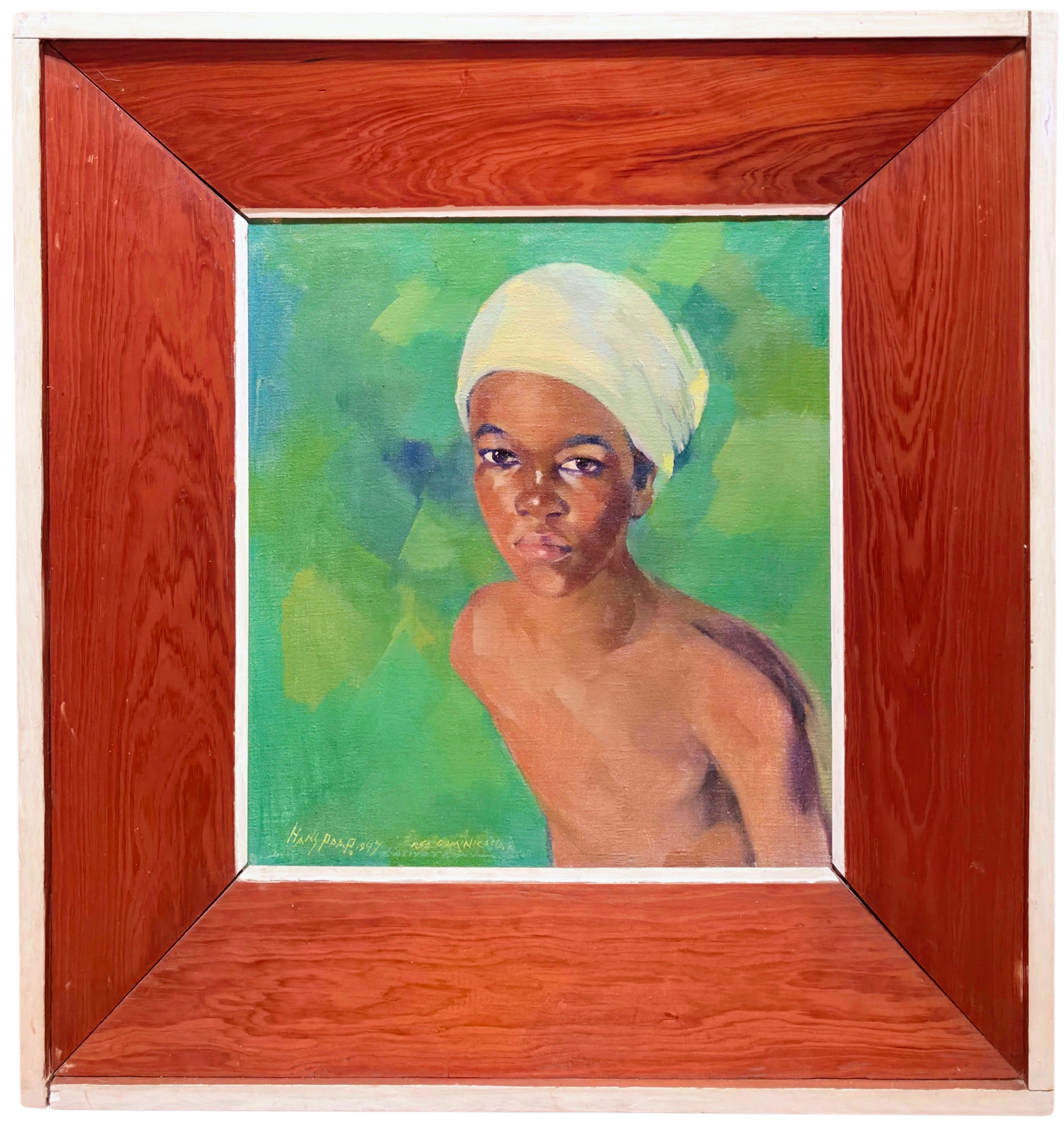
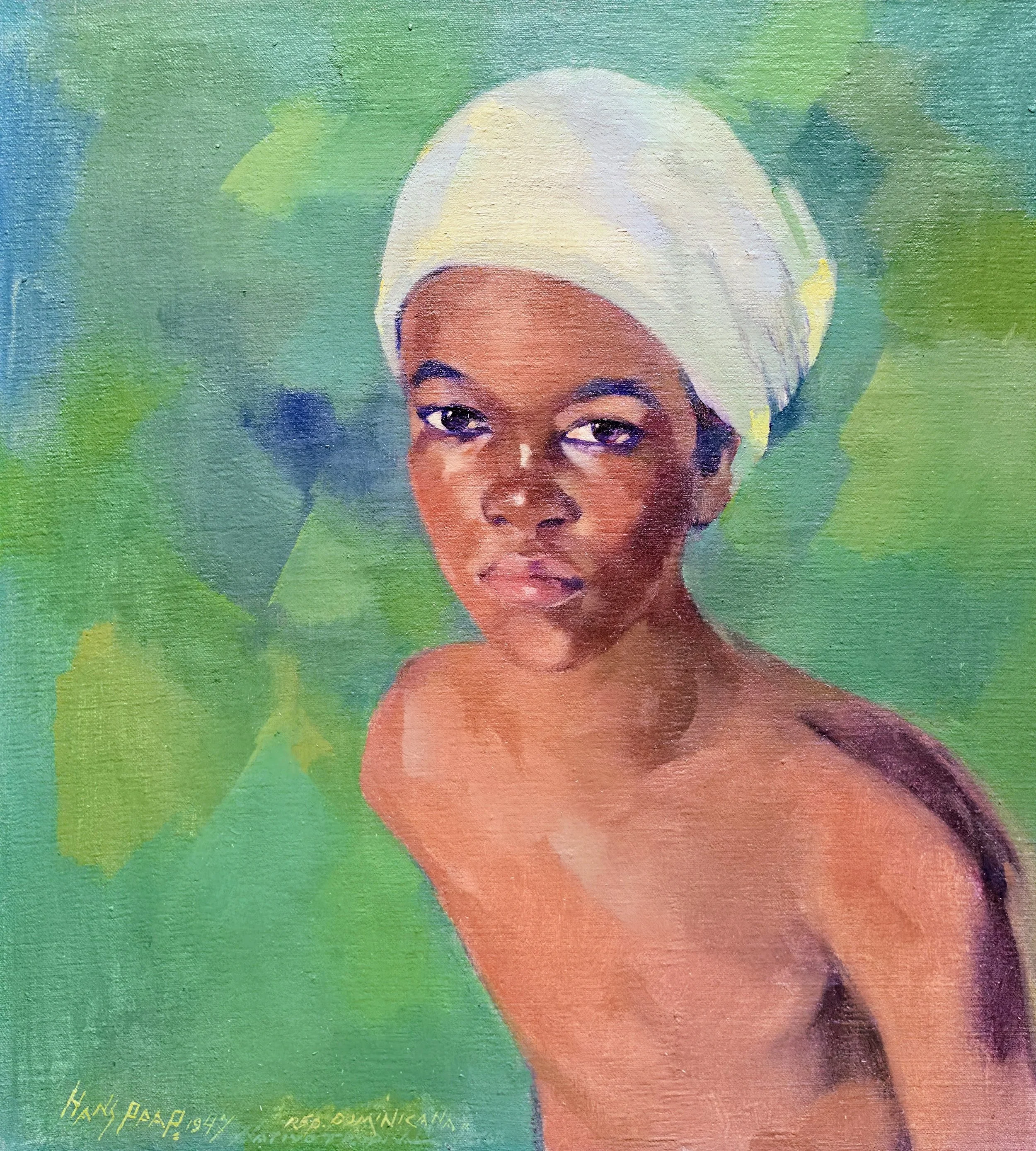
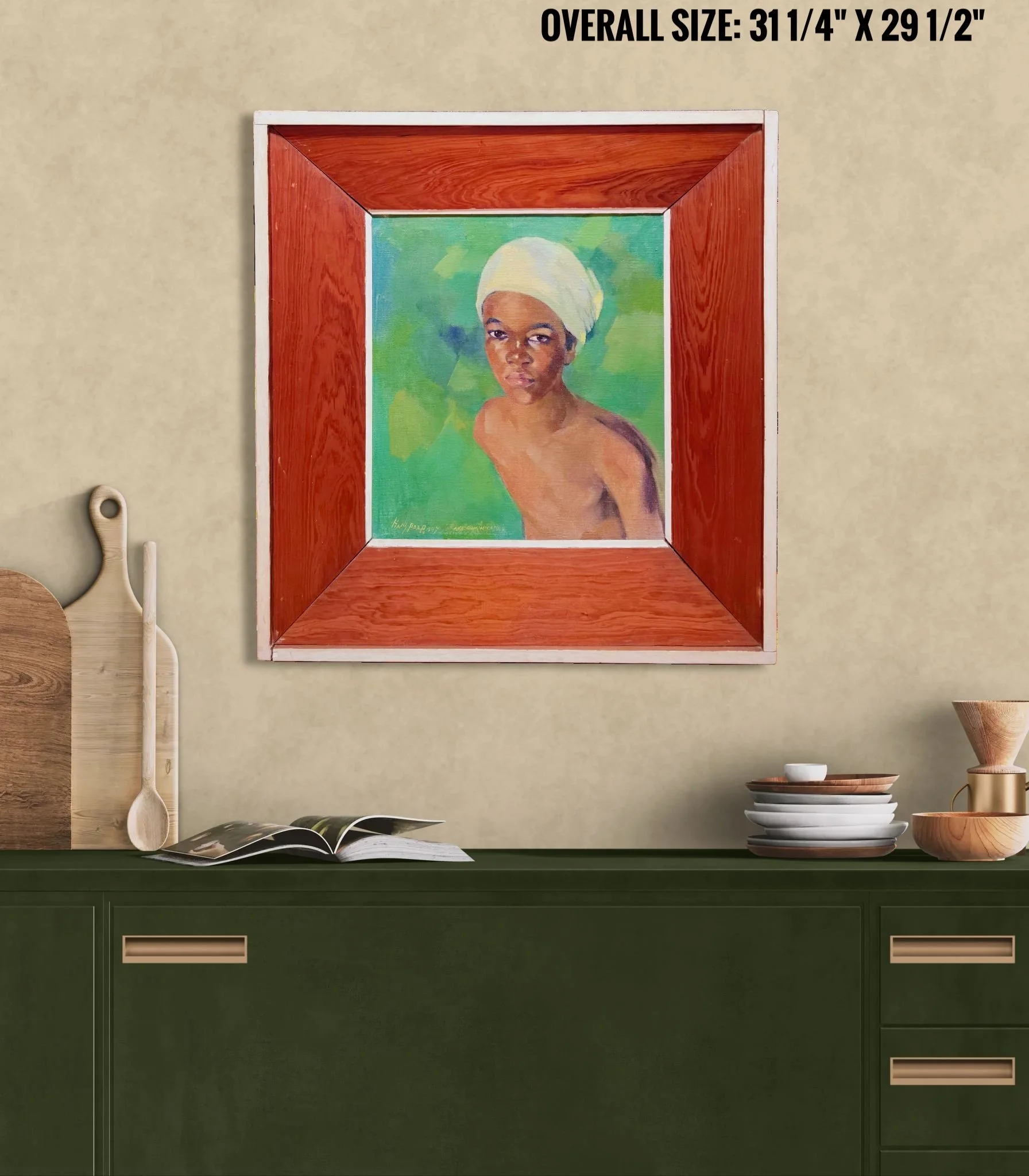
Nativo Tropical, 1947 by Hans Paap
Hans Paap (German/American, 1890-1967)
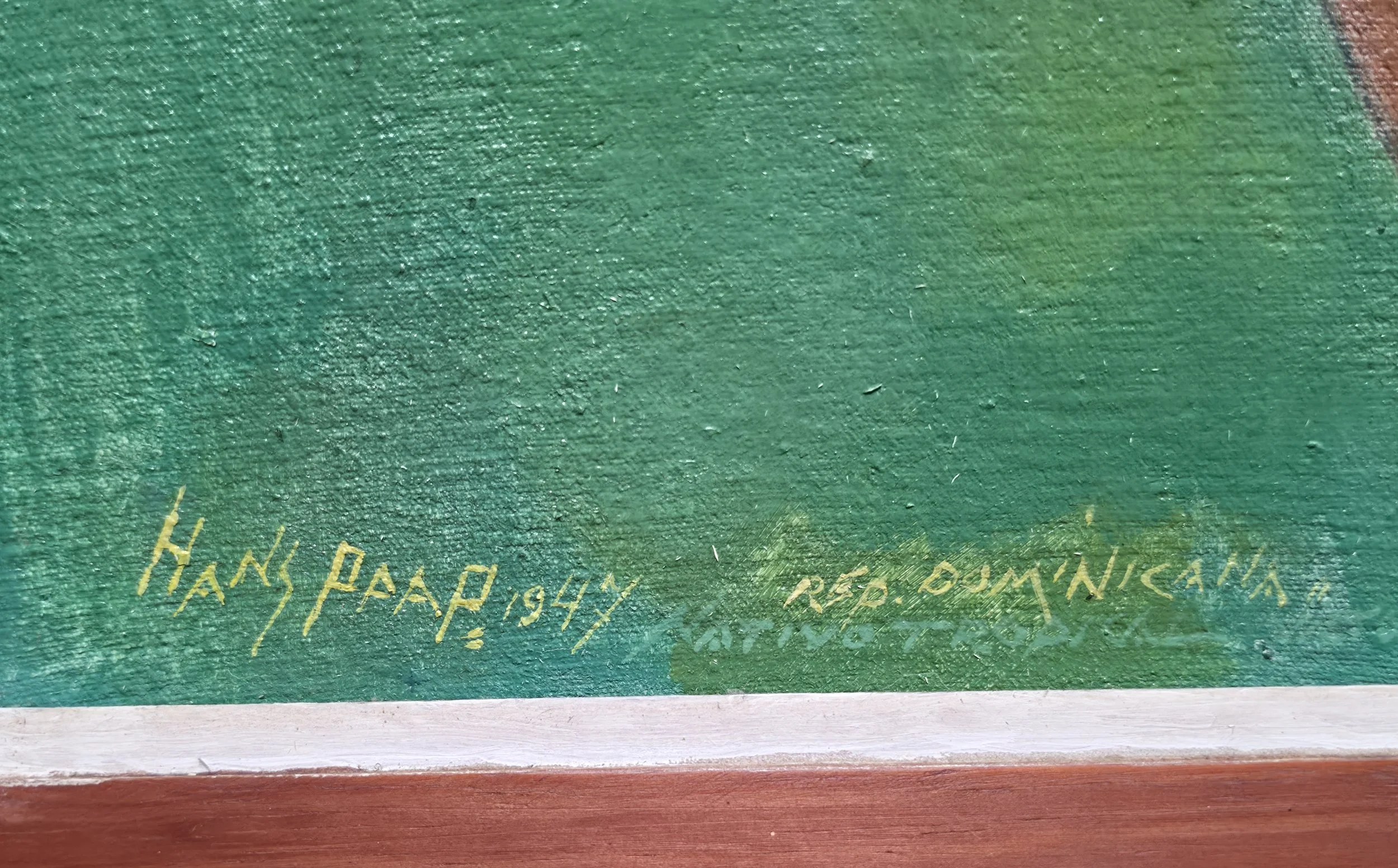
Signed: HANS PAAP. 1947 (Lower, Left)
" Rep. Dominicana " (Right of Signature)
" Nativo Tropical ", circa 1947 (Lower, Center)
(Tropical Native)
Oil on Canvas
20 1/8" x 18 1/8"
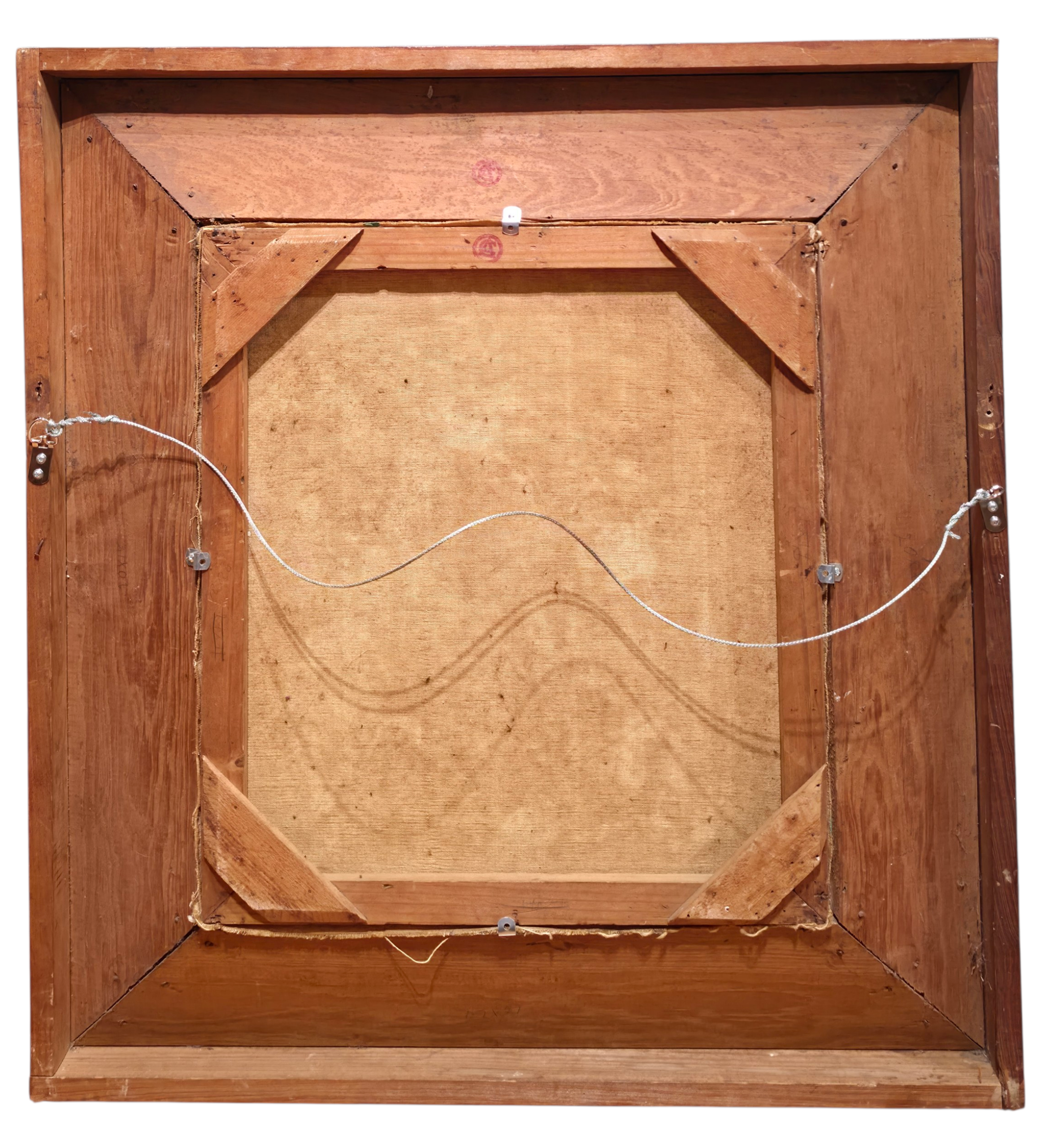
Housed in its original 6" Artist-Made Frame
Overall Size:
H: 31 1/4"
W: 29 1/2"
D: 3”
This painting is in very good original condition. Ready to be hung and enjoyed.
During the late 1940s Paap lived in the Dominican Republic and taught at the National School of Art in Santo Domingo. Portraits of local and Indigenous people rendered with strong color and emotional immediacy is a theme that appeared throughout Paap's career - this being a wonderful example.
The subject is presented with direct, unwavering eye contact, giving the painting emotional gravity and dignity. The white head wrap becomes the visual anchor of the composition - against the luminous greens and turquoise background, it almost glows.
Paap uses broad, simplified planes of color instead of fine detail. The face is modeled with warm reds, violets, ochres, and browns rather than realistic flesh tones.
The background is intentionally abstract and atmospheric. Rather than depicting a literal place, it creates a tropical, humid, almost dreamlike environment.
The pose - shoulders angled while the face turns forward - creates tension and presence. The figure appears alert, self-possessed, and psychologically complex.
The unfinished or loosely painted torso is important as well. Paap seems less interested in realism than in capturing presence, light, and character. The face receives the sharpest focus, while the rest dissolves into painterly color fields.
Artist Biography:
Hans Paap, born in Germany, was a world traveler who worked as an artist in Argentina, Brazil, Mexico, Portugal, the Dominican Republic, and in the United States, including Los Angeles, Taos, and New York.
According to author Bess Murphy, Paap studied at the Royal Academy of Fine Arts in Munich before moving to Veracruz, Mexico in his early twenties to “study and work in lithography, textiles, fabric painting, and leatherwork.” He later worked briefly as a filmmaker in the emerging German film industry around World War I.
Paap’s extensive travels and “near nomadic” lifestyle are reflected in his paintings. His works from the 1920s show clear influences of late Impressionism, early Cubism, and Fauvism, as he focused on portraits and landscapes. By 1928, Paap had moved to Los Angeles, where he exhibited works that Murphy describes as his “evolving style,” aligning with post-Impressionist early European and American modern painters. An LA Times article from this period quotes Paap as saying he intended his new work to “embody [his] conception of American life and energy.”
Although Paap’s portraits and landscapes from other regions were well received, his most iconic work was created in New Mexico. As Murphy notes, “Paap’s personal life and career was defined by his experience in Taos.“ When Paap arrived around 1929, the Taos Society of Artists had already disbanded, but their legacy had established the area as an international art colony. This reputation attracted a new generation of artists and cultural figures, including Georgia O’Keeffe, John Sloan, Rebecca Salsbury James, and John Marin. Paap became friends with several former TSA members, such as Kenneth Adams, E. Martin Hennings, and Walter Ufer.
The artists, landscape, and people of the region profoundly influenced Paap. As Murphy notes, his portraits and landscapes from this period were “driven by a deeply romantic, exotic view of Northern New Mexico and its inhabitants.” Paap’s initial stay in Taos lasted only a few years, but he returned in 1949 after time in Portugal, displaced persons camps in Germany, and two years on Ellis Island. By 1953, Paap had moved to Hawaii and spent the following years traveling throughout Europe, Mexico, and the United States, including another visit to Taos.
He died in Hamburg, Germany, in 1967.